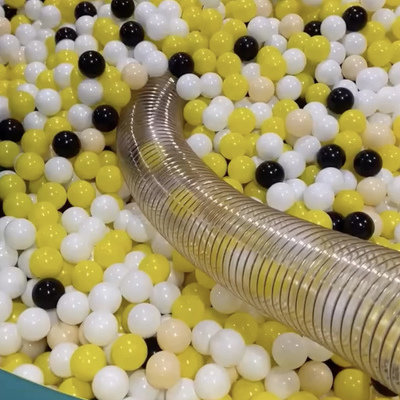
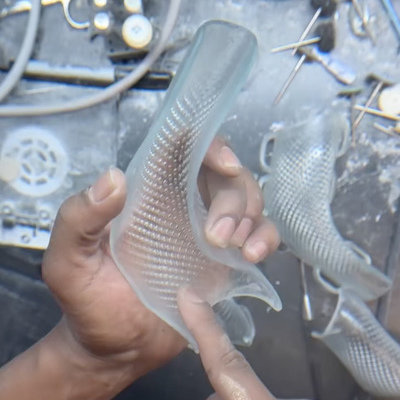
Well, the name kind of gives it away, but for some reason it's still surprisingly delightful... probably because the small purse is a dead ringer for the office supply it's based on.
As our society seems to grow more tech-enhanced by the minute, so too are we burdened with more gadgets that represent extensions of our bodies (not to mention a host of newfangled gestures and body language). Citing water and impact as the major weaknesses of electronic devices, Luke Mastrangelo recently designed a backpack that offers protection from both, based on a distinctive form factor that follows from its polycarbonate skeleton. "What we carry, why we carry and how we carry has changed dramatically. Prism is a personal project, reflecting on this notion; seeking to answer both a digital and analog challenge."
The 1000D cordura nylon and embedded solar panels aren't breakthroughs by any means, but combined with the internal polycarbonate frame and thoughtful details, the Prism represents a nicely executed personal project, largely unconstrained by manufacturing considerations. Regarding the construction, Mastrangelo told us
The polycarbonate frame was CNC cut out of a sheet of 1/4" thick Lexan, and bent into shape on a cold-steel bender. It's entirely removable, which was a manufacturing decision to simplify the sewing process. Basically the fabric skin is stretched taught over the frame, and then zipped up around it, which keeps the whole system in tension, providing a tesseract of sorts for your laptop/tablet on the inside (think old school egg-drop style). The backpack is 100% functional, the lights, solar charger, rain-proofing, etc.
As we saw with Crumpler's laptop bag, the laptop compartment can be accessed from the side for the sake of expediency.
The ongoing quest to design the most minimal wallet ever is something of a race to the bottom: my colleague hipstomp, for one, has resorted to using a Japanese train pass holder, and we see so many Kickstarter projects that (for better or for worse) we have to pass on some of the more worthy ones. At least one of my friends has opted to forgo leather or PVC for perhaps the most minimal system of all: a humble but practical rubber band.
Designer Chieh Ting Huang does him one better: Nothing Fancy is a collection of seamless, stitchless leather accessories—a wallet, a coin purse, an iPhone case and a passport holder—that consist of single pieces of leather that are cut into foldable patterns and secured with a simple elastic.
Nothing Fancy, aka the non-stitched minimalist wallet, is the first product in a range of everyday accessories reimagined for a contemporary lifestyle. The wallet has its origins in the classic image of the bundle of banknotes held together by a rubber band. The mission was to create a design with the minimal amount of materials, simplifying the object to its basic function.
Each wallet is created from a single piece of leather, requiring no stitching—shortening the time it takes to produce each one and saving on materials. The custom-made rubber bands make placing banknotes and credit cards into the pockets easy yet maintains the security of a traditional stitched wallet. The use of minimal material also reduces the thickness otherwise found in a traditional wallet.
A company called Bullet Blocker manufactures child-size backpacks that feature bulletproof inserts made from a Kevlar-like material. ABC News reports that their sales increased 1,000% following the awful, horrific events last week at Newtown, Connecticut.
Another company called Amendment II, in Utah, makes similar products. They report sales have increased 500% since last Friday.
The backpacks are meant to be used like shields that children crouch behind. Some news sites are circulating photos of children using the backpacks to do this. (I realize these are meant to be instructional, protective measures, but I found the images too disturbing to post here.)
The men running each company, Elmar Uy and Derek Williams, respectively, both have children of their own.
Uy and Williams, who are both fathers, recognize that bulletproof backpacks and the inserts their companies sell aren't a solution to surviving a school shooting.
"There is only so much you can do," Williams said. "The bottom line is, having some armor is better than none. I don't want my kids to be unprotected in schools, which are becoming increasingly violent."
Amendment II plans to donate a portion of their sales to the families of Sandy Hook victims, Williams said.
"On Friday my business partners and I were in tears along with everyone else. We're all fathers," he said. "We can't do much except do what we can and what we're good at, which is making good body armor."
Amsterdam-based entrepreneur Marijn B. Berk and bag designer James Jeffrey are working on an interesting product: A bag that not only carries your laptop, tablet and smartphone, but can charge all of them up. Called Phorce and billed as "The world's first smart bag," the rectangular satchel boasts unseen, on-board power that can charge up to three devices at the same time, via built-in cables.
That's the power part; as for the smart part, the bag itself connects to your smartphone via Bluetooth. With this enabled you can set an alarm, so if you and your bag move a certain distance apart, it sounds. That won't help you if you leave both in a cab, but if you walk out of a meeting with your phone and absent-mindedly left your bag behind, it'll let you know before you hit the elevators.
Beyond the techie stuff the bag has well-thought-out physical design features: Expandable sides, waterproof zippers and fabric, a strap system that converts the bag from backpack to shoulder bag, and magnetically-clasping dual handles for a briefcase mode.
The slickly-produced Kickstarter video is here, but I actually found their more raw YouTube video provided a better look at what the bag can do:
Here we go again: with this September's release of the iPhone 5, third parties have yet another excuse to revisit the iPhone case. We've passed on a lot of the usual suspects, but a pair of independently-developed Kickstarter cases are noteworthy for their ultraminimal approach. Alex Karp's "Bummpies" and mod-3's "Radius" case kicked off their campaigns within 24 hours of one another last week, and although they're different enough that they're not outright competitors, both cases abide by the less-is-more approach to design.
First of all, I should clarify that Bummpies will work with the three most current models of iPhone: seeing as Karp's been working on the adhesive bumpers for 16 months, he must have started designing them for the 4/4S and simply tweaked them for the new model. This gives him a significant edge in terms of potential customers.
The mod-3, on the other hand, has the ambiguous advantage of a Harvard-educated designer and CAD-geeky backstory: Hendra Bong holds a graduate degree in Architecture the Ivy League school. (A bit of digging reveals that Karp actually studied mechanical engineering but has since shifted his professional focus at HP.)
Bummpies are made of polyurethane rubber and are attached with a semi-permanent (but removable) adhesive from the materials experts at 3M. The corners for the Radius are made of 6061 aluminum with a non-slip lining; they're held in place by an X-shaped brace, which is secured with a tiny screw (as is the case with many of Apple's offerings).
Although I'd come across Seldon Yuan's Bandolier Bag (created under his SSCY moniker) before he submitted it to our call for submissions our All City All Stars exhibition during ICFF this year, I didn't realize that he was more than just a designer: we ended up selecting his other entry, a sculptural work called "Center of the Youniverse," for the exhibition. When we met in person, he mentioned that he was also working on poetry and a novel, supporting himself as a web developer. Since then, he spent the summer working on a public sculpture, which is currently on view at Socrates Sculpture Park, and he's scarcely had a moment to catch his breath as he's been selected for the next year's Bronx Museum of Art Biennial. (Perhaps the Modern Renaissance Man should be another phenotype...)
Besides the ongoing writing and art projects, Seldon has somehow found time to launch his latest bag, the "Tack." Billed as a "backpack disguised as a tote bag," it's a strong contender for a versatile, go-to bag for stylish yet practical urbanites:
SSCY continues on with their mission of filling a gap in our porting and traveling needs with their newest bag known as the Tack. Tired of having to take off a backpack to access it and annoyed with trying to ride a bike with a tote bag, they've combined the features of both to create a perfect hybrid for travel by bike or by foot. With a few simple steps the bag converts from a tote bag to a backpack and back again.
The Chill Can is a package design with a twist: If the name didn't tip you off, the thing chills itself. Using a "Micro Cooling" technology which has reportedly been in the works for nearly two decades, the can uses onboard CO2 to somehow drop the contents by 30 degrees when the user hits the button. (The curious among you can attempt to decipher the scientific explanation here.)
So how does this impact the environment? I suppose if it were absolutely widespread enough to make a dent in the production of styrofoam coolers, that'd be one thing. But the terse description on the Chill Can website under "Environment" is decidedly not reassuring: "It has been tried, tested, and found to be environmentally safe." Ah, we see! Awesome!
The Chill Can recently won the Editor's Choice Award for Packaging Design at Supply Side West, an industry tradeshow. To that accolade, however, I must confer my own award of Worst Promotional Videos Ever:
In their quest to cover the full range of wallet needs, the relentlessly-evolving Bellroy has released a new model that's the opposite of the carry-all Travel Wallet: The Card Sleeve Wallet.
Minimalist and ultra-slim, the Card Sleeve does away with the bi-fold form factor and adopts the company's "Nude Approach," where the idea is "better outcomes with fewer materials. There are no linings, no zips, in fact, there's almost nothing but vegetable tanned leather and thread." And, of course, design: A pull-tab prevents wallet-mining when it's time to produce a business card, and there are quick-stash slits front and back for the plastic you use most.
"We've been testing and refining this for several months now, and have fallen in love with the updates," writes Bellroy's Lincoln Eather. "And we think we've nailed it."
The Card Sleeve comes in both flat leather, for those who prefer an even-wearing black, and pull-up leather in cocoa or blue, which will more quickly develop patina and character marks.
Kata Bags creates "lightweight protective carrying solutions
for photo and video equipment," and given that the two founders are ex-Israeli-military guys, it's no surprise that one of their new bags draws its inspiration from a gun.
Their Revolver-8 model aims to solve the problem of an outdoor photographer who needs to quickly and frequently swap out lenses. To that end the bottom half of the bag contains an unusual circular compartment—a "revolving magazine," as they call it—featuring a user-configurable chamber into which separate lenses can be loaded.
During set-up, the photographer can open a flap to access everything at once; while in the act of shooting, they can open a smaller flap to spin the magazine and access the lense they need. And despite the circular bottom, the bag still appears to stay upright when placed on the ground, a nice touch.
There have been at least a couple ultra-popular wallets on Kickstarter lately, typically variations on ad hoc solutions dressed up in premium materials. In fact, the crowdfunded wallet category has attracted enough backers for me to wonder how many people are going through what should be one of their most prized personal possessions so quickly as to warrant throwing down for a new one at every turn (shelling out cash or credit from their unsatisfactory or nonexistent wallet, no less).
So I was understandably skeptical when I received an e-mail entitled "Super Fun Wallet" in my inbox. Long story short, I was pleasantly surprised by the pitch on the other end of the link: the Flip n'Grip wallet lives up to its billing as a clever, playful-yet-practical cardholder. Distinctive for its trigger-style finger loop (the 'flip'), the minimal, RFID-blocking aluminum body is nicely executed but unremarkable otherwise; rather, the Flip n'Grip is noteworthy for its integration of a neat bit of sleight-of-hand (the 'grip'). Watch:
Curious to learn more about the Flip n'Grip (the barebones website sends potential customers to the KS page, as is often the case with product design projects), I replied to co-creator BJ Minson for more details about his project. He gladly supplemented the information on Kickstarter with the full story behind the Flip n'Grip.
Dan [Loveridge] and I met in school, where we both recently finished our degrees. He is a chemist by training, but an inventor at heart. Before he started school, he already had several patents from products he developed working for a dental company. I'm a mechanical engineer, a handyman and a machinist. I've always loved looking at the way things are designed, especially the way people interact with products; specifically, I've done a bunch of stuff with robots and medical equipment. We got along really well because we love designing and creating new and fun things—it's kind of funny that we have the technical degrees that we do, when we both really love the more artsy side of design and things.
Something we haven't seen a lot of yet in 3D printing, but which we're sure will become common, is people rocking a single material in such a way that it changes characteristics within a single object. Up above is the "Sweater" Case, which beat out 70 other designs to win Shapeways' recent Design for iPhone 5 contest. Designed by ArtizanWork, a Maryland-based collective of independent artisans focusing primarily on jewelry, the case goes from rigid at the edges to flexible on the larger surface as the material changes thicknesses. Looks pretty cool in the vid:
"Handwoven by robots," the company cheekily writes, "the cross stitching can move separately from each other creating an awesome tactile feel while acting like mini shock absorbers that protects your phone." It's available both on Shapeways' website in white, or you can buy directly from ArtizanWork with a few more color choices and a protective anti-stain coating.
Nighttime in downtown Manhattan, about a year ago, and I see this kid tearing down the street on a BMX bike—with a piece of carry-on luggage balanced on the crossbar between his frantically-pumping knees. It looked so un-doable, but the kid was moving so fast, that he clearly had practice doing it. What was weird was that I knew he was probably headed for Baxter Street.
I'd basically just witnessed Phase Two of a common local crime. To explain, I live near several popular hotels, and incautious tourists have been getting separated from their luggage for years. I knew that after snatching the bags, the thief would take them to a quiet street like Baxter or Crosby, rifle through them to take whatever was worthwhile, then ditch the bags. I deduced this by frequently spotting Phase Three—new pieces of some poor sap's luggage sitting in sidewalk trash piles, his clothes strewn about, every zippered pocket flayed open. What I didn't know was that the thief could execute Phase One—the snatching—via bicycle.
In any case, this is my roundabout way of saying I spotted a cool concept for luggage by London-based RCA student Rodrigo Garcia that I'd never dream of using in a city, but I still think the idea has merit. Check it out:
A buddy of mine who goes camping carries a foam eggcrate-looking thing with him. He explained that it's to lay on the ground underneath your sleeping bag as a measure of insulation. Even rolled up the thing's pretty bulky, but he says it's indispensable.
The AeroBed Pakmat seems like a neat alternative, and I dig the design (though I should admit I have very little camping experience). First off it's inflatable, so air pockets provide the insulation rather than bulky material, and once emptied it rolls up to a fraction of its size. Secondly it stows away in the canister you see here, which is actually the hand pump you use to inflate it.
You can be fooled by the product photos into thinking the canister's smaller than it is, as it kind of resembles a water bottle; but poking around the web I found this review, and the photo below shows its actual size:
The $120 asking price on Aerobed's website seems kind of steep, but they're also selling them on Amazon for 96 bucks.
This morning we passed the mob scene at the Apple Store SoHo, where hundreds are already queued up to buy the iPhone 5. Chances are none of them yet have a MakerBot Replicator 2, but for those of you with other 3D printers who plan on making your own case for the 5, the blueprints are now available online.
To download the large version of the 2D CAD file you see above, click here.
MakerBot user Hisashikun can get you a step further, as he's already taken the time to input the dimensions into an STL file and uploaded it to Thingiverse. Print out your own iPhone 5 dummy, which you could then use, for example, as a plug to make a leather case around.
This post is sponsored by the sleek, stylish, lightweight HP Spectre XT Ultrabook™, inspired by Intel. Design a bag that is just as stylish!
We all have one—you know, one of those bulky, semi-functional laptop bag. It might be utilitarian black or pop paisley, but chances are it's more protection than style statement. There's no room to complain...here's your chance to throw your hat in the ring to win $10,000 and an HP Envy Ultrabook by designing the ultimate laptop bag in the HP + Project Runway Design Contest.
As a sponsor of Lifetime TV's Project Runway, HP has a commitment to style and design. Their new, sleek HP ENVY Ultrabook laptop weighs in just under 4 pounds with a slim profile of 14.72"W x 9.95"D x 0.78" H and is in need of your designs. The jury panel composed of Jill Fehrenbacher, founder of Inhabitat, Mondo Gurerra of Project Runway and LinYee Yuan, Editor at Core77 will be looking for designs that display innovation, style, design details, practicality, marketability and appropriateness for the HP Ultrabook ENVY.
First, design a bag to hold an HP ENVY Ultrabook: the dimensions are 37.4 cm (14.72") W x 25.3 cm (9.95") D x 2 cm (0.78"). Then check out the contest site where you can:
Upload up to five images of your design (in a .jpg, .png, or .gif format at 800x600 pixels wide)
Enter a Title of your Design
Enter a short explanation of your bag design: concept/design/inspiration and include materials used, size/dimensions of bag, and production/manufacturing process
Don't wait, enter your designs today! The deadline for entries is Saturday, SEPTEMBER 8th! The second phase of the contest opens up voting to the public to identify five finalists who will win their own HP Envy Ultrabook. The jury team picks a winner for the $10,000 prize!
A truly original contest needs a true original to kick it off. Watch the official announcement from Project Runway winning designer Mondo Guerra and Inhabitat's Jill Fehrenbacher.
Survivalists are an interesting subculture. Out of curiousity I read a few books from the genre on how to survive apocalyptic disasters, and while I found their ideologies too extreme to personally support, there are plenty of things designers can learn from them. For example, if I had to design a hyper-functional bag, they are the first group I would consult and study.
Here's why: They are completely obsessed with both gear and the idea of self-sufficiency. They prize durability and functionality in a product because their fervency makes them believe their lives will depend on it. They build backups and redundancy into their carry systems to compensate for product failure or unforeseen problems.
More importantly, unlike a soldier who is assigned a standardized piece of kit, survivalists scour the product landscape for the best, and can freely hack the gear to suit their needs. Soldiers must rely on the design talents harnessed at Natick (click here for our entry on a recent first-aid kit re-design), but the survivalist and his or her discretionary income have companies actively courting them.
One such company is "hard use gear" manufacturer Maxpedition, whom we last looked in on in 2010. Through customer feedback, they realized that their FR-1 pouch, which they had designed as a medical kit, was being subverted by users into a "survival pouch." The company must consider it a godsend of free advertising, because here you have survivalists making their own videos to explain to other survivalists what they like about the bag and how they pack it. Here's an example:
Say the words "travel wallet" and one of the the last words that would come to your mind as a description is "compact." Travel wallets are meant to be the one place where you keep all your important travel documents and on a long haul journey, that can mean anything from passports to airplane boarding passes to that 3 page print out of your itinerary. In this situation, what you need is space and that's not a quality to apply the less is more concept.
Bellroy, an Australian bag company is attempting to do just this with a compact, billfold version of a carry all wallet. I had a chance to take it on the road for a weekend cross country trip to the left coast and knock it around.
The first thing you'll notice is that "compact" is a relative term. As men's wallets get smaller and smaller to accommodate a few bank cards and bills, the Bellroy Travel Wallet in comparison looks positively Mastodonian:
But the dimensions of the wallet was built around a standard passport, which slips right into a pocket when you flip the thing open:
A good design call on this feature, most customs and immigrations folks want you to hand over your papers unencumbered by a fancy case. And if you're paranoid about losing things like me and pat yourself down at least three times a day to make sure you didn't forget something, having your passport front and center means less time freaking out.
The billfold area is divided into two sections—one for money and the other for other travel documents—tickets, receipts, folding up pieces of paper. The size was just right for my boarding passes and it was good to have everything airport security people want to check in one place:
Imagine you're giving a five-minute presentation on industrial design to a crowd of people who have never heard of it. You're asked to show two different versions of the same product, one exemplifying good design, the other exemplifying lousy design, to help the crowd "get it." What objects would you choose? If it were me I'd mention the story of the Jerrycan versus the Allied fuel containers of World War II.
Those two items were designed in the 1930s. What's going on in the design of military gear today? In America we've got the Natick Soldier Systems Center, an R&D center meets design-and-engineering firm focused on military needs. "If a Soldier wears it, eats it, sleeps under it or has it airdropped to them, it is researched and developed on [our] 78-acre campus," explains a Natick press release.
One of Natick's departments is the Load Carriage Prototype Lab, where equipment designers like Rich Landry (pictured up top) create bags and wearable gear holders. A former Pathfinder for the 82nd Airborne Division, Landry recently re-designed the Army's IFAK, or Individual First Aid Kit, bag. The previous iteration of the IFAK was rushed out in 2003 due to sudden military demand and was thus a mere retrofit design of an ammunition pouch.
Smartphone cases serve two purposes: besides the obvious protection that they provide, cases are also a way to personalize one of one's most personal possessions. From graphic treatments to sheer utility, it seems that new options are available by the day. It's a cottage industry that's hit its stride, for better or for worse, with the rise of Kickstarter as a product design platform: I'd make a conservative estimate that the ol' inbox sees at least one new KS case per week.
Of course, many of these cases are, as they say, nothing to write (or is that text?) home about... which is precisely why a new contender on Kickstarter caught my eye. New Orleans-based Phaze5 has an interesting take on a pocketable iPhone 4/4S case with a bit of funky functionality: designer Trey DeArk and musician Terence Green hope to launch the company with the FLASHr case, which is just under 30% funded (with four weeks to go).
By adapting the built-in "LED Flash for Alerts" feature—an accessibility option on each and every iPhone 4/4S—to illuminate the trim around the edges of the case, the FLASHr is a sort of hardware-enabled software hack: Phaze5's repurposing of the phone's LED is almost MacGyver-like... if Richard Dean Anderson's character had access to injection molding and aluminum stamping.
Designer Joseph Guerra, who recently completed his degree in Furniture Design at RISD, is pleased to present the "Oaxaca Case," part of his senior thesis.
The briefcase is an archetype with connotations of luxury and gentrification. This polypropylene case references the material and formal language of generic shopping baskets from grocery stores, which is where the pattern on this case is derived from. I redefined the typology of the briefcase through material and production technique. I glorified plastic and the archetype of the generic plastic shopping basket so that this object would communicate the notion of unexpected value. The shopping basket exists as exactly what it needs to be and it does so in an efficient way and then I elevated this efficiency through the language of the briefcase. Choosing to reference this generic object allowed me to thoughtfully engineer new substance and significance into the briefcase, making the object appeal to the user in a more sophisticated way. This mix of the generic and the sophisticated results in a multiplex of uses. This bag could be brought to an interview or you could bring it to the beach.
Guerra notes that the case takes its name from the Mexican state—"a place with beautiful beaches"—a nod to his heritage. "All in all it seemed like a fun name tied to some of things that are important to me as an individual and as a designer."
The polypropylene sheet is laser-cut—presumably to punch out the grid of holes—and scored by CNC at the perforations; the folded form is secured with a dozen snaps at the vertices. (It should go without saying that it's intended to ship as a flatpack, either to retailers or end users.)
The photos are strikingly architectural, resembling a scale model of some kind of a ultramodern housing complex. Not to read into it to much, but perhaps it's also a comment on the sense in which one might 'live out of a briefcase'?
Conversely, it's remarkable how the flattened schema implies its three-dimensional form.
Be sure to check out the rest of Guerra's portfolio—it's a solid showing of his Dutch-inflected work.
I love hearing about the various paths people take to become product designers, particularly the more unusual ones.
Last year Mike Bratcher rolled out of L.A. on his motorcycle, a Honda dual-sport XR650L loaded up with traveling gear. In his rearview mirror was the job he'd recently quit at the Parts division of a major auto manufacturer. During his five-year stint he'd risen to Sales Manager and learned a lot about business, before ultimately deciding the demands of a career in sales were not for him.
But Mike wasn't fleeing L.A.; he was taking time off to see America. Nearly four months later, he rolled back into town with 17,048 more miles on his bike and the URL for a Tumblr page where he'd photo documented the trip. "The United States is much bigger and beautiful than I could have ever imagined," he concluded. "Three-and-a-half months is not nearly enough time to soak up this country, but it was a good overview at the least." Perhaps most amazingly, he'd not spent a single night of the trip in a hotel or motel, but instead carried everything he'd need for life on the road.
You can see a detailed breakdown of the insane amount of things he had to carry here, but there is one item in particular that's most relevant to this entry:
That's a simple tool roll Mike made for himself. "There's a lot of tool rolls out there, for like 10 or 15 bucks, but none of them were exactly right for me," he explains. "They were all way too generalized, so I just made my own." Bratcher had been making things for himself since growing up on a farm in Indiana. By junior high his classmates were surreptitiously making bong parts in shop class; Mike, more interested in chess than weed, made himself a chess board and the 32 playing pieces to populate it. "It wasn't easy," he laughs, remembering. "Sixteen pawns, four knights, four rooks...."
Always curious to give a new backpack a try in my quest to find the perfect bag, I didn't think twice about agreeing to review Booq's "Mamba Shift" when they reached out to us several months ago. Only afterward did it occur to me that there are actually two kinds of perfect bag: the go-to, everyday pack that becomes an extension of one's body, and those that fill—or rather, can be filled to serve—a specific need, patiently awaiting their intermittent calling, at which point they will humbly fulfill their duty (i.e. a frame pack). Read on to find out if the Mamba Shift proved itself worthy of that elusive upper echelon of faithful utility.
My first impression of the Mamba Shift was that it looked pretty slick—judging a Booq by it's cover, perhaps—with its unconventional vertical detailing on the front, which is bisected by a seam that runs the length of the panel. A pop color peeks out from the top half of the split, concealing the functional pleat of the expandable front pocket. The pocket is big but the zipper is a little awkward, as it runs along one of the two slightly curved seams along either side of the centerline; it's also hard to see what's in there. (Similarly, diagonal stitching conceals a slash pocket on either side, their openings limned by red piping.) The general aesthetic is minimal but still a little overdesigned for my taste.
The front pocket is also lined with the pop color
Personal preferences aside, the materials and construction exude 'premium product': the 1680 denier nylon feels largely impervious to the elements and the Mamba Shift feels entirely sturdy, albeit a bit heavy at three pounds. The Mamba Shift boasts substantial padding throughout, and the Nylex-lined laptop pocket, in particular, accounts for some of the weight: it's incorporated between the main compartment and the back of the bag, like a giant laptop sleeve (indeed, a separate sleeve would be overkill). A foam pad between the laptop pocket and the breathable Airmesh padding adds a bit of structure to the backpack. No complaints here: it's easily accessible and feels safe, even cozy.
The turtle shell-like exterior of the bag belies its highly partitioned interior: the main compartment is divided into no less than ten pockets, plus a removable nylon pouch. Lest it seem like that Booq design team has lined the inside of the Mamba Shift with as many pockets as they possibly could, each one is a slightly different size, material or dimension. While it's at the consumer's discretion as to what, if anything, goes in each one, the sheer number of permutations—nylon or mesh lining, velcro or elastic enclosure—seems a tad superfluous.
The slash pockets are split into four, with the dedicated pen and business card slots at left; the opposite face of the compartment (bottom of the picture) has the other five pockets
The abundance of pockets certainly presents a variety comfortable homes for cords, tablets and other periperhals, but bulkier objects pose a problem: a DSLR fit best at the bottom of the main compartment, which can be difficult to reach when you've loaded up the upper pockets (I was also baffled by the decision to put dedicated business card and pen slots near the bottom). Nevertheless, the zipper runs along a full three-quarters of the Mamba Shift, enabling easy access when completely open—flaps of nylon prevent stuff from spilling out the sides—but the usable volume is limited by the stiff exterior panels, which offer extra protection at the expense of capacity.
Raise your hand if you know what a "title block" is.
I don't think I've physically touched a blueprint since the '90s, but apparently they're still around, presumably unfurled at job sites and the like. Hence Geoffrey and Valerie Franklin, the Oregonians behind Walnut Studiolo, designed this spiffy leather blueprint case.
Originally designed as a one-off for a map-carrying friend, the Franklins figured their had to be a market for those who carry rolled goods, and the leather-tanned tube is now for sale on their Etsy page. But good things come to those who wait, and their Blueprint Carrying Case is no exception—being hand-stitched, it's got a one-month lead time.
If your job, hobbies or extreme clumsiness make big, bulky protective iPhone cases a must, you've got to check out LunaTik's TAKTIK. MNML's Scott Wilson, the immensely successful creator of the TikTok + Lunatik and the Touch Pen, is now on his third Kickstarter project, with current pledges tripling the original $150k funding goal with a week and a half to go. Can't say we're all that surprised.
The TAKTIK's bold, faceted shape is a loose adaptation of Wilson's 2004 (before Kickstarter was a glimmer in Yancey's eye) speculative design project for WIRED Magazine. Enlisted to conceptualize "device singularity in 2014," Wilson and two colleagues dreamt up the Nike EyeD, a wearable gadget that kept tabs on one's fitness parameters and spoke wirelessly to other devices, which was essentially a fusion of things nonexistent at the time: the FuelBand + large-screen smartphone. (And lest his collaborators go uncredited, Joe Kosinski went on to direct 2010's Tron Legacy and Stefan Andrén was the design director for Nike+ at launch.)
While that original concept was largely unrestricted by current technical and material limitations—i.e. component size, weight and thickness—Wilson has astutely translated the design language into an outboard case to complement the technological prowess of the wizards in Cupertino. Insofar as good design rarely lives up to functionality, Wilson and his team at MNML have once again achieved their distinctive aesthetic with TAKTIK, which is loaded up on both.
We can't believe it's already June 1st! In New York City that means we're entering the full-swing of the summer season—backyard BBQs, concerts in the park and the sweet arrival of Italian Ice pushcarts on street corners around the City.
This Sunday, the Lower East Side hosts the first street festival of the season with DayLife. Promising to transform three blocks of the LES into an "urban backyard," the event features neighborhood food vendors and retailers hawking treats, DJs, live music and activities for your whole hipster crew (ping pong, skate ramp, DJ lessons).
For the occassion, Dub Studio Architects created a prototype for a new kind of pushcart. The modular carts are made of components that are easily assembled, moved, stacked and positioned. When closed, the carts are occupy 12 sq ft. When opened, the carts expand out to 120 square feet (the equivalent of a parking spot.) The pushcarts offer a smart, cost-effective solution for city street fairs, and will be reused in the fall for subsequent events.
The event is the lovechild of LES BID and DUB Studios Architects brought together through the great work of desigNYC. designNYC connects designers interested in civic engagement with extraordinary nonprofits to improve the lives of New Yorkers through the power of design.
See the push carts in action this Sunday!
LES BID and DUB Studios present... DayLife
Sunday, June 3rd
Noon - 5PM
Orchard Street between Houston and Delancey