Brought To You By
Get Our Newsletter
Submit

Sign-up for your monthly fix of design news, reviews and stuff to make you smarter.

Follow Core77
Twitter Facebook RSS


Furniture Design

The Core77 Design Blog

send us your tips get the RSS feed
 
Posted by core jr  |  13 Mar 2013  |  Comments (2)

granoff-suite.jpg

Reporting by Sarah Pease

A reception earlier this month marked the official completion of another successful collaboration between the Rhode Island School of Design (RISD) and neighboring Brown University. Four RISD students, Taylor McKenzie-Veal, Scot Bailey, Ian Stell, and Yumi Yoshida, along with faculty advisor Christopher Specce, worked for almost two years to design and produce a suite of site-specific furniture for Brown's newest building, the Granoff Center for the Creative Arts. [Ed. Note: We'd previously been impressed with work from Mckenzie-Veal, Bailey and Stell at Ventura Lambrate in Milan last year.]

granoff-center.jpgBrown University's Granoff Center for the Creative Arts

The furniture designs were conceived and produced to resemble the familiar furniture typologies present in a living room. "The suite of furniture can be rearranged, adjusted, and adapted to the multifunctional program of the building. These furnishings extend the utility of each landing and breathe life into the space with a punch of inviting color," described McKenzie-Veal. The collection includes the following three pieces:

granoff-sofa.jpg

The Granoff Sofa

The Granoff Sofa is a flexible seating system design specifically for the landings within the building. In its complete couch arrangement, the furniture fills the full width of the landing. At once, the sections of the sofa can be pulled apart to become three independent seating surfaces. Users can rearrange the sofa into a large variety of formats to cater specifically to the task at hand.

granoff-chair.jpg

The Granoff Chair

The Granoff Chair is a geometrical lounge chair that utilizes the formal language of the building to create a surprisingly comfortable seating experience. Designed to mirror the triangular, planar forms of the building and contrast with the organic forms of the couch, this chair provides a counterpoint to the other furnishings as well as a wonderful spot to sit and enjoy the building.

granoff-stool.jpg

The Granoff Side Table / Stool

The Granoff Stool & Side Table is a multifunctional task surface that directly interfaces with the couch and chair. A set of three can nearly double the seating quota of a particular landing or simply provide users with a surface to place their belongings or kick up their feet.

continued...

Posted by hipstomp / Rain Noe  |  13 Mar 2013  |  Comments (3)

stratflex01.jpg

A newer design technology in the Wintec Innovation fold (see our post on their Winbloks) is their Stratflex system. It's essentially flatpack furniture with a twist, or rather, a bend: Plywood is scored through several of its layers at specific junctures, allowing the forms to ship flat, but flex during assembly. The gaps are permanently filled with a flexible polymer that can withstand the slight deformation.

stratflex02.jpg

stratflex03.jpg

continued...

Posted by LinYee Yuan  |   8 Mar 2013  |  Comments (1)

thingking_rube1.jpg

Thingking, a Cape Town-based design/build studio was honored this week with the 2013 Most Creative Stand Award at Design Indaba Expo. Their Twitter-activated Rube Goldberg machine served as a backdrop for their minimal objects.

thingking_trestles.JPGSimple Trestles

Thingking is Lyall Sprong and Marc Nicolson's "designer-maker consultancy." Based in Cape Town's design district of Woodstock, the three-year-old company does a range of client work ranging from interior/exhibition to interactive products (check out their Lipton Vending Machine, "the world's first floating vending machine.) We wrote about Thingking's converted Gypsy Caravan buildout for The Soft Machine, an ice cream truck that debuted at Design Indaba last year.

thingking_plantstands.JPG

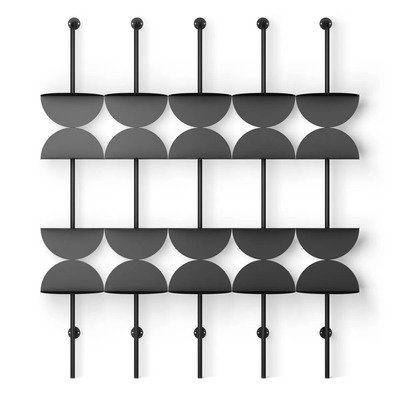
At this year's Expo, they showed a small range of their design objects—I particularly loved their Pot Plant Stands, freestanding or wall-mounted powdercoated steel frames that are designed to support potted plants as singles or in series. Their nesting plywood Nominal boxes, represent the duo's design ethos. They work with common materials, creating objects that, "are designed by the people that choose them. Undefined, non-precious, archetypal frameworks."

thingking_nominalboxes1.jpg

thingking_nominalboxes2.jpegNominal Boxes

continued...

Posted by hipstomp / Rain Noe  |   8 Mar 2013  |  Comments (1)

mechanical-bureau-joe-paine.jpg

While the Oeben Mechanical Desk conceals all of its machinery inside its form, designer Joe Paine's equally beautiful Mechanical Bureau proudly wears its gears on its sleeve. The now-you-see-it, now-you-don't worksurface is operated by a crank attached to gears and a rack and pinion system, inspired by 19th- and 20th-Century farm equipment. Check out how smooth it looks in action:

Jo'burg-based Paine's creation recently made an appearance at Design Indaba, where it was a Finalist for Most Beautiful Object in South Africa 2013.

Posted by Carly Ayres  |   7 Mar 2013  |  Comments (1)

The Saji Chair - Ash veneer and mild steel

Sitting in the emergency room after sustaining a somewhat minor chisel wound to her forearm, Laura Kishimoto calmly taught those around her to fold origami parabolas. The injury was a small price to pay in fabricating her latest design, Saji Chair, a marvel of geometry not far off from the parabolas she was creating that night.

spoon-chair.png

A senior in the Department of Furniture Design at the Rhode Island School of Design, Kishimoto often looks to geometry for inspiration, an influence that is evident throughout her work. President of the Origami Club in high school, half-Japanese Kishimoto has been toying with the limits of paper to create new forms from a young age.

Close up of Leaf Chair, made from craft paper, epoxy resin, expanding foam, mild steel

Star Weaving, wooden dowels and elastic bands

"Geometry is both a tool and a crutch in my design process," says Kishimoto. "I find it impossible to create an original idea without some foundation to build upon. Geometry is very useful in this respect since it is an established system of rules, easily broken down into logical patterns. Its abundance in the natural world also irretrievably links to our subconscious conception of beauty."

Working in the determined system of mathematics, Kishimoto tries to break that sense of predictability to maintain an element of intrigue. By adapting a more intuitive process, she strives to create unique forms in each piece that departs from the expected to arrive at unparalleled results.

Below are three of her projects, the Yumi Chair, Tessellation Cabinet, and Nautilus.

continued...

Posted by hipstomp / Rain Noe  |   4 Mar 2013  |  Comments (3)

steelcase-gesture.jpg

Steelcase has announced that they've been studying what many of us have undoubtedly noticed: These days we do a lot more in our chairs than sit and type or mouse. With smartphones and tablets taking an increased role in our workflow—think of how many times a day you're interrupted by texts or the Facebook updates you've routed through your phone to get around your company's broadband blocking—we're leaning back, shifting, and fiddling with devices that aren't part of the work surface.

We undertook a global posture study in 11 countries, observing 2000 people in a wide range of postures, and uncovered nine new postures as a result of new technologies and new behaviors. We studied how the human body interacts with technologies and how it responds as workers shift from one device to another. Research revealed ergonomic implications that, if not adequately addressed, can cause pain and discomfort for workers.

They've distilled their research into an ultra-flexible (figuratively speaking) chair called the Gesture, which is slated for release later this year. We assume they're still working out the kinks, as all we've got for now is a teaser video:

I don't know if all nine of the positions illustrated above are truly new, but I have to admit I do five of them on a daily basis. (How about you?) Also, I'm looking forward to a future video where they demonstrate how the Gesture fits in with these positions.

See also: 'Curious Rituals' - Technology-Induced Gestures & Posture

Posted by hipstomp / Rain Noe  |  27 Feb 2013  |  Comments (3)

ramelli-bookwheel-01.jpg

My favorite thing about the iPad is having dozens of books in one place. Having grown up lugging my share of dead trees around, I'll never not appreciate digital book storage and access.

This is especially true after coming across the Bookwheel, the rather massive sixteenth-century design for a mechanical book "server" that you see above. Designed by Agostino Ramelli, a military engineer who spent his professional career creating siege machinery, the more peace-minded Bookwheel was intended as a convenient way to reference multiple books. Heavy tomes didn't need to be lugged from shelves, and they could be left open on the last page you'd read, unmolested by the rotations; Agostino's design ensured each shelf remained at the same angle no matter the wheel's position.

The device was reportedly never built, at least not in Ramelli's era; but the design for it was revealed in his humbly-titled book The Various and Ingenious Machines of Captain Agostino Ramelli, printed in 1588. Interestingly enough, Ramelli's designs have since been criticized as the work of an egomaniac; detractors claim his mechanisms were overly complicated, with extraneous convolutions added purely to demonstrate his mechanical prowess.

That didn't stop Daniel Libeskind from creating a version of the Bookwheel for the 1986 Venice Architecture Biennale. Libeskind's version, reverse-engineered from Ramelli's image, was called the Reading Machine.

ramelli-bookwheel-02.jpg

An interview with architect Hal Laessig, a former student of Libeskind's who had helped with the Biennale installation, reveals it to be a truth-is-stranger-than-fiction endeavor.

ramelli-bookwheel-03.jpg

First off, according to the interview, then-professor Libeskind pressed his Cranbrook students into building the machine for him. And apparently architecture students at Cranbrook weren't taught about wood expansion back then:

...There were two guys who built the Reading Machine by themselves with no power tools, out of ash, which is an incredibly hard wood. I don't know how they did it. They basically slept in the woodshop.

But when we got to Venice, the hot, humid air had swollen all the wood, so it wouldn't turn. And the teeth on the gears would start snapping. So we had to sand all the parts down—for days—to get it to turn.

ramelli-bookwheel-04.jpg

continued...

Posted by hipstomp / Rain Noe  |  14 Feb 2013  |  Comments (0)

reinierdejong-steel-01.jpg

If the raw materials used to create these chairs appear ugly at first blush, well, they've earned the right; for all of their useful lives they've served as broom, rake or spade handles, helping people keep their floors and yards tidy. Core77 fave Reinier de Jong has turned these cast-off items to the more aesthetically pleasing, if equally ignominious, task of supporting your ass.

De Jong's Steel folding chairs retain their original hard-earned patina on their unworked surfaces, but we dig how he's scalloped out the parts that come into contact with your body, revealing the "clean" wood within while bowing to ergonomic considerations.

reinierdejong-steel-02.jpg

reinierdejong-steel-03.jpg

reinierdejong-steel-04.jpg

Got some old brooms of your own? Get in on the action:

You can also contribute to this chair. Donate your old wooden handles of brooms, rakes, spades, flagpoles etc (28 to 29 mm thick) and have it turned into a chair for yourself.
Posted by hipstomp / Rain Noe  |   8 Feb 2013  |  Comments (2)

designstudioetcetc-01.jpg

Another take on the "desk with a gutter" is the My Writing Desk, from Lithuanian design couple Inesa Malafej and Arunas Sukarevicius. I love the form of this one, with its bent plywood wings, and the more modernist worksurface that's pure form-follows-function—the rectilinear shape accommodates two drawers.

designstudioetcetc-02.jpg

Function follows form, too: Because the corners are negative space, cut out of necessity for the steam-bending, you've got a handy notch to both hang a bag and route cables.

designstudioetcetc-03.jpg

continued...

Posted by Ray  |   7 Feb 2013  |  Comments (0)

JiwonChoi-ChairChairBench-1.jpg

Last week, we covered Jiwon Choi's Tyvek Vase in an effort to connect her with a potential manufacturer for the minimalist product. Lest she become known as a one-hit wonder for a polyethylene vessel, her portfolio includes several interesting experiments in furniture—she studied Furniture Design at RISD—such as her latest work, the Chair Morceaux (not pictured), which reminds me of RO/LU's "Primarily Primary" chair.

However, I was particularly impressed with the Chair+Chair=Bench, which is like a vaguely Duchampian variation on the theme of convertible seating. The mirror-image siamese connection evokes both a canopy and a world turned upside-down (Ai Weiwei also comes to mind). Yet it's not as absurd as it seems: where the title suggests a pair of chairs 'joined at the hip'—i.e. side-by-side—to form a bench, the result is far more interesting: it functions as both an art chair and a functional bench without compromising the form of either object.

JiwonChoi-ChairChairBench-2.jpg

Posted by hipstomp / Rain Noe  |   7 Feb 2013  |  Comments (0)

leko-oeben.jpg

Remember the wicked Oeben mechanical desk we showed you back in November? If you don't, let us refresh your memory:

In the original post, we expressed our hope that someone like Brian Grabski would take a crack at recreating the 18th-Century masterpiece. Grabski's a little busy running his own business, but unbeknownst to us, another craftsman had actually decided to recreate Oeben's work.

John J. Leko is an Alabama-based woodworker and furniture builder, a graduate of the Marc Adams School of Woodworking, and is currently pursuing a Fellowship at that school. Last June he had an opportunity to study Oeben's original mechanical desk at L.A.'s Getty Museum, and he's decided to reproduce it for the Fellowship:

His instructors might have said "No," but the Kickstarter community said "Yes": Leko's met his $6,000 target and there's still nine days left to pledge.

Speaking of days, several hundred of them will go by before this fiendishly-complicated project is complete. Leko's anticipating the sheet will come off by July 2014.

Thanks Steven!

Posted by hipstomp / Rain Noe  |   7 Feb 2013  |  Comments (6)

tomas-kral-homework-01.jpg

Switzerland-based designer Tomas Kral's Homework Desk is unusual: Made from cast aluminum sandwiched between two sheets of ash, it contains a sort of gutter that runs around three edges. Rather than being for drainage, it's meant to store desktop items, well, off of the desktop. For his part, he describes the wraparound as "A toolbox to store documents, objects, photos that you need or simply desire to work." No drawers necessary.

tomas-kral-homework-02.jpg

Here's a shot of an early mockup made with cardboard and particle board:

continued...

Posted by Ray  |   6 Feb 2013  |  Comments (9)

BalzerKuwertz-PalletChair-step1.jpg

Following yesterday's spelling lesson, here's a quick tip to remember the difference between the three homophonous words that are pronounced "PAL-it": palate, which most closely resembles 'plate,' refers to the sense of taste; palette denotes a mixing board for paints, as in several early 20th-c. French art movements; and a pallet is a portable platform for moving goods, as in "pal, let me move those for you."

As of last May, I happen to be a bit more familiar with pallets than I ever would have anticipated: several members of our NYC team were on build-out duty for last year's "All City All-Stars" exhibition, which incorporated some 300 pallets in Laurence Sazarin's exhibition design. (You can check out the largely unseen raw making-of footage here.) All of those pallets were the standard North American dimensions of 48”×40” (1219mm×1016mm), but we did encounter a EUR-pallet (also known as a "Euro pallet") in the early stages of the build, which is how I learned that they use slightly smaller ones overseas. EPAL—the European Pallet Association, of course—specifies not only its 1200mm×800mm×144mm (47.2”×31.5”×5.7”) dimensions but also the prescribed pattern of 78 special nails that hold them together.

However, EPAL has no jurisdiction over young German designers Yanik Balzer and Max Kuwertz, who recently sent us an upcycling project in which they transformed a Euro pallet into a set of three chairs "with almost no waste of material."

BalzerKuwertz-PalletChair-step2.jpg

BalzerKuwertz-PalletChair-step3.jpg

BalzerKuwertz-PalletChair-step4.jpg

Hit the jump to see results...

continued...

Posted by hipstomp / Rain Noe  |   5 Feb 2013  |  Comments (3)

team7-flaye.jpg

Team 7 is an Austrian outfit that manufacturers furniture out of (gasp!) natural wood, using walnut combined into three plies. Led by experienced wood designer Jacob Strobel, they've created a byoootiful extending table with well-concealed extra panels. I've seen similar mechanisms before, but the easy, elegant precision of this one, coupled with the gorgeous walnut finish, has me drooling.

It's called the Flaye, and unsurprisingly there's no video of what we designers all want to see—what's going on below the table during the action. All they'll say is that it works via "revolutionary non-stop synchronised pull-out technology."

Posted by hipstomp / Rain Noe  |   4 Feb 2013  |  Comments (1)

klaffi-01.jpg

These individually folding shelf units are making the blog rounds, but I object with how they're being billed by other design blogs as "space-saving" units. While I like the pieces and think they're pretty, I'm not sure how they would save you space; for one, things left on a shelf typically stay on a shelf; it's not as if you clear all your books and magazines off it on a daily basis, and even if you did, where would you then put them? Secondly, even if you were to fold up every single shelf, it seems you're gaining mere inches of extra room.

klaffi-02.jpg

That being said, I find the pieces handsome. Called the Klaffi shelves, they were designed by Finnish architect/designer Eeva Lithovius, come in three different finishes, and can be purchased here.

klaffi-03.jpg

Posted by Ray  |   1 Feb 2013  |  Comments (1)

GeorgeNelson-HermanMiller-CSS-viaArtnet.jpgImage via Artnet

Timelessness, it seems, is a matter of taste: while Dieter Rams' recently-revisited Vitsœ 606 is at the top of my list for furnishings when I eventually settle down, a couple commenters begged to differ. Those of you who prefer the warmer aesthetics of Mid-Century Modern heirlooms are perhaps duly predisposed to the Comprehensive Storage System by George Nelson for Herman Miller.

GeorgeNelson-HermanMiller-CSS-viaWright20.jpgImage via Wright20

While the CSS certainly rivals the 606 as a paragon of functional beauty, the Michigan-based MCM manufacturers have long since discontinued the product—it's only mentioned in passing as a 1959 milestone in Herman Miller's company timeline. As such, well-preserved examples command healthy resale prices—from around $4,500 to upwards of twice that—on the secondary market.

GeorgeNelson.jpgMore on the Pretzel Chair below...

However, as of the new Millenium (or Century, as it were), the mystique of George Nelson Associates was beginning to dissolve. It turned out that many of the iconic products and graphics to Nelson's name, produced during his 25-year tenure as Design Director of Herman Miller, from 1947–1972, were actually the work of lesser-known and often uncredited designers. Which is not to say that Nelson was a designer himself: he was an architect and writer by training and trade, and he made few, if any, decisions regarding the designs for which he is widely credited (and acclaimed).

Case in point, Chief Designer Irving Harper has only recently been recognized as the creative force behind the long-canonized Ball Clock and Marshmallow Chair, as well as Herman Miller's logo. The chronicle started with Paul Makovsky's seminal profile of Harper for Metropolis back in 2001 and culminates this month with the forthcoming release of Skira/Rizzoli's Irving Harper: Works on Paper, a 12-year effort by Michael Maharam of textile fame to shine light on the unsung genius in his lifetime (the designer is just a few years shy of triple digits).

IrvingHarper-WorksonPaper.jpg

continued...

Posted by hipstomp / Rain Noe  |  30 Jan 2013  |  Comments (3)

brian-grabski-12913.jpg

I'd like to get Brian Grabski, he of the hidden drawers, in a room together with Matthias Wandel, the woodworking mad scientist. Grabski's got a new hidden drawer ready, and while his videos are nowhere near as clear, explanatory and well-edited as Wandel's, I'd rather see too-brief footage of Grabski's work than none at all. Take a look at the crazy wooden lock mechanism revealed in the second half of the vid:

Grabski builds custom closets and furniture for a living in Minneapolis.

Posted by hipstomp / Rain Noe  |  28 Jan 2013  |  Comments (3)

grcic-b-barcelona-01.jpg

In 2009 Konstantin Grcic designed the Table B, launching BD Barcelona's Extrusion line of furniture. Sporting an extruded aluminum tabletop, the Table B came with three distinct leg options: Chunky concrete, cleanly-crafted oak or a web of stainless steel rods.

grcic-b-barcelona-02.jpg

In 2010 Grcic followed up with the B Chair, made from ash with a dash of aluminum. The folding chair was designed to neatly nest into a horiztonal stack.

Grcic-B-Barcelona-EDIT.jpg

continued...

Posted by Ray  |  25 Jan 2013  |  Comments (2)

BarberOsgerby-AscentWesternFacade.jpg

As of this week, Edward Barber and Jay Osgerby have been named the Maison & Objet Designers of the Year, an auspicious start to 2013 for the London design duo. In addition to exhibiting several previously-seen projects, they unveiled the new Tobi Ishi table for B&B Italia in Paris last week, shown alongside the Tip Ton chair for Vitra and Ascent collection for Haunch of Venison—which we saw at last year's felicitously-titled Designs of the Year 2012 exhibition—as well as the Western Façade bench for Established & Sons and the Bell Lamp for Louis Vuitton.

BarberOsgerby-TipTonAscent.jpg

BarberOsgerby-TobiIshi.jpg

BarberOsgerby-TobiIshiAscent.jpg

Barber & Osgerby are also pleased to announce that the £2 coin that they designed for the Royal Mint—commissioned on the occasion of the 150th Anniversary of the London Underground this year—has just gone into circulation.

BarberOsgerby-2PoundCoin.jpg

continued...

Posted by hipstomp / Rain Noe  |  24 Jan 2013  |  Comments (5)

nadaaa-2-01.jpg

When we first spotted NADAAA Architects' Bob Sidetable and Edna Desk, we thought ah, sure, we've seen plywood stacked to create solid forms before.

nadaaa-2-02.jpg

nadaaa-2-03.jpg

It gets a little more interesting with their Gomez Coffee Table, where the stacked sheets unexpectedly give birth to a flowing lower shelf:

nadaaa-2-04.jpg

continued...

Posted by hipstomp / Rain Noe  |  24 Jan 2013  |  Comments (0)

nadaaa-1-01.jpg

Boston-based architecture firm NADAAA designed the residence above in the Modernist style, but using lots of wood where I'd have expected concrete and glass, if I'd only seen line drawings. What most caught my eye are the subtle ways they've chosen to detail the otherwise plain boards:

nadaaa-1-02.jpg

nadaaa-1-03.jpg

I wanted to see more, but photos of the property are sparse. On NADAAA's website, however, they've got more innovative takes on wood construction, like their interesting Oro Bookshelf. A traditional bookshelf has a panel on the back that squares up the frame, but NADAAA wanted a pass-through bookshelf, meaning they needed to build extra strength into the corners. And rather than shoring them up with traditional joinery, they incorporated these bent plywood braces:

nadaaa-1-04.jpg

nadaaa-1-05.jpg

continued...

Posted by hipstomp / Rain Noe  |  24 Jan 2013  |  Comments (3)

sibille-sensei-01.jpg

Remember the wicked Ludovico Office space-saving desk and chair? It was designed by Uruguayan industrial designer Claudio Sibille. We just came across Sensei, another of Sibille's space-saving designs, this one even more heavily Modernist-looking.

sibille-sensei-02.jpg

The chairs, which you can break out when you've got company, also serve as a nifty table:

sibille-sensei-03.jpg

No word on if these will see production or if they're just a concept. If you're reading this, Sibille, hit us up with some facts (and shore up that Coroflot page!).

sibille-sensei-04.jpg

Posted by hipstomp / Rain Noe  |  21 Jan 2013  |  Comments (2)

brian-miller.jpg

Who's the sexier guy/gal in the furniture making process: The artsy designer furiously scribbling in their overstuffed sketchbook, or the sawdust-covered craftsperson with their array of amazing tools?

I'll tell you who it ain't: The finisher. You can probably name tons of designers and craftspeople, but not one famous finisher. No one brags that they own a chair that was finished by Lynn C. Doyle. The finisher is the most slept-on person in the furniture process, yet provides that crucial protective coat and determines the final texture and color of the piece.

Here's a video of furniture finishing vet Brian Miller, an instructor at the William Ng School of Fine Woodworking, a well-regarded institution in Southern California. Miller explains how to apply a simple but effective hand-rubbed finish using stuff you can get at the local hardware store. (He also advises you on the proper way to dispose of those troublesome oily rags. I like to throw mine in the corner near a stack of old newspapers next to the furnace, but I guess Miller's way makes sense too.)

Posted by Ray  |  17 Jan 2013  |  Comments (6)

Vitsoe606.jpg

The Vitsœ 606 Universal Shelving System is arguably as close to perfection as an article of furniture can possibly be. Designed by Dieter Rams in 1960, long before the lowercase "i" became the de facto indicator of thoughtful minimalism, its beauty lies in the fact that it is a paragon of functionality, as evidenced by nicely executed short film:

Indeed, the iconic shelving unit was the subject matter of choice for a couple of entrants in our "Good Design Is Long Lasting" sketch competition, a collaboration with Phaidon on the occasion of the publication of As Little Design As Possible: The Work of Dieter Rams. Despite the two artists' antithetical approaches to depicting the 606, both Yuka Hiyoshi (top) and Dave Pinter (bottom) successfully capture the spirit of the shelving unit.

1960-Vitsoe-Yuka_Hiyoshi.jpg

1960-Vitsoe-by_Pinter.jpg

Fun fact: The design takes its name from its year (1960) and the fact that it was the sixth Vitsœ product—hence, 60-6.

DieterxRodin.jpg"I can't think of any way to improve the 606..."

Posted by hipstomp / Rain Noe  |  16 Jan 2013  |  Comments (0)

Steelcase-Verb.jpg

Think back to when you were in grade school: Did you like the furniture? The stuff filling the schools of my youth was so crappy and unremarkable that I can barely remember what it looked like.

Perhaps that will be different for the next generation. Steelcase is updating the classroom with their very cool Verb line of furniture, consisting of rollable tables, desks and chairs, a system of whiteboard panels that can be used as both slates and dividers, and an Instructor Station that even has a cupholder to hold a nice, frosty beer. Or maybe it's for coffee, I guess all of our schools were different. In any case, behold:

The Verb line isn't aimed purely at schools, but is also aimed at "corporate learning spaces and project team rooms." But even in the latter spaces, the cupholder is solely installed in the Instructor Station while the regular desks are blank. I kind of like that, as it allows whomever's in charge to lord it over their dehydrated underlings.

Posted by hipstomp / Rain Noe  |   7 Jan 2013  |  Comments (7)

human-hoist.jpg

Here's a rather interesting piece of highly specific transforming furniture: The Human Hoist, which is designed to go from rolling chair to floor-level mechanic's creeper. Your average consumer will have no use for it, but for a grease monkey with no hydraulic lift, it provides a quick way to get from under the car to the toolchest and back again. Check it out (and lower your speakers if you're at work, annoying soundtrack ahead):

There's no word on what the thing would cost, as it's currently just a prototype. Whoever's behind the product has announced they're "actively looking for potential investment and/or [a] manufacturer to produce The Human Hoist," but their website has absolutely no useful information.