Core77's coverage of Milan Design Week 2010 has come to a close. This year, in addition to photo galleries, videos, blog posts and interviews, we brought Core-toonist fueledbycoffee to illustrate the whole thing. We've bundled it all up into a neat package, interspersed with some of our favorite photos from the gallery.
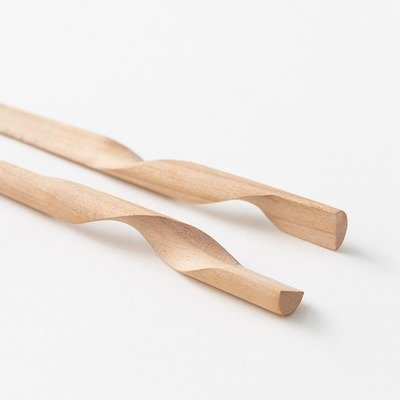
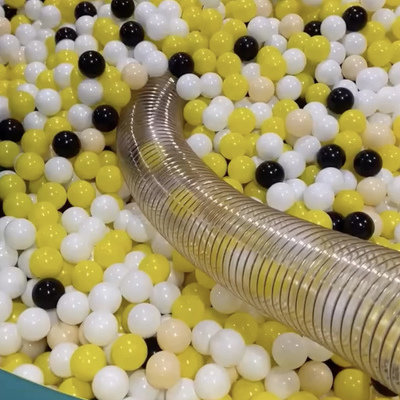
From top to bottom: Nendo's Chair Garden in Brera. Tom Dixon's "Factory Workers" at Superstudio's Temporary Museum of New Design. Enzo Mari's paperweight collection at the Kaleidoscope Space. Bottom: Marcel Wanders' documentation of his Sparkling Chair for Magis. From our Milan 2010 Gallery.
Wonderlamp is a collaboration between Pieke Bergmans and Studio Job, presented by Dilmos last week in Milan. At the exhibit, we spoke with Nynke Tynagel, one half of Studio Job, who provided some insight into the studio's working process: everyday icons, archetypical forms, contradictions as inspiration, castles, and answering the phone.
Nynke (right) and Pieke are pictured at the Dilmos gallery above.
Core77: Tell us about Wonderlamp.
Nynke Tynagel: It's a collaboration with Pieke Bergmans. She's known for her glass Light Blubs. Sometimes, you see work and think 'I wish I thought of that, I wish it were my idea.' That's why we approached her and asked her to collaborate. She also uses an archetypal material, using glass the same way we use bronze. It was very obvious to put these two together into one object. We also thought it was a nice idea to collaborate; this is our first.
C77: What's the idea behind the project?
NT: There are 7 light objects. Each lamp has its own little idea. In each, the glass represents a different material. In one lamp its steam, in another it's a beam of light. In another, it's smoke.
C77: Historical references and cultural icons are very visible in your work. How did you use these in Wonderlamp?
NT: The pieces you see here, the 7 lamps, are everyday life pieces. The pots and pans your mother has in the kitchen, a torch, and a neon lamp. They aren't really historical. This year we did some really joyful pieces, without a dark, heavy meaning.
C77: How do intuition and research balance in your process?
NT: Of course, we look into history, visit a lot of places and are inspired by a lot of things, but intuition is really important. You develop a kind of language. Job and I, we speak the same language. That's why we end up doing the work we do. For me its very hard to describe my thoughts, to translate them into words. I express my feelings through the pieces.
C77: Does storytelling play a role in this?
NT: We always think about placing our work inside a castle. We see it as a small society with every aspect of life within it. You have the farmer and the big boss. You have religion, a chapel, a dining room, a kitchen. We like to think of a little story that happened in that small society and place our work in every room of that castle.
C77: Can you discuss the graphic nature of your work?
NT: It is always the archetypical form we are searching for. They're in our head but never really exist when we try to find them in life. We are always looking for those shapes. Sometimes we blow them up and they become more like sculpture.
C77: What do you mean by archetypical form?
NT: For example, when you think of a teapot, the form that comes to mind.
In the video above, Tokujin Yoshioka demonstrates the material qualities of Memory, his new chair for Moroso. Below, a Q&A about the chair's backstory and the role design should play in the world. Images of Yoshioka's work for Kartell and Swarovski can be found in our extensive Milan Design Week 2010 Gallery.
Core77: Tell us about Memory, your new piece for Moroso.
Tokujin Yoshioka: Memory is a chair without a fixed shape, but an infinite, unlimited possibility of form. We are now living in a time of change, so it is important that everybody participate in design. This chair expresses that: people can change the form of the chair freely.
C77: Materiality and natural phenomena seem to play an important role in your work. Can you discuss this?
TY: Design is not only about forms or shapes. I want to work with emotions, sound, light, and fragrance. All these things are elements of design.
The chairs at the Moroso exhibition were well tested by passers-by.
C77: Once you have an idea—for example, to grow a chair from a crystal like you did in 2008—how do you investigate it in the studio?
TY: Of course our studio is a design studio. but we conduct many different kinds of experiments throughout the year for each project. For the Memory chair, in particular, I wanted to express a shape that cannot be imagined by human beings. The process started with material—I wanted to use aluminum fabric. Then, we created about 50 different samples to verify the correct shape and size.
For this project, Yoshioka developed a special, crushable fabric from recycled aluminum.
C77: What do you want to accomplish with design?
TY: It's important to create things that will appeal to one's heart once in motion. It's not important to design beautiful shapes. I want to create things that will touch one's heart and stir emotions. That is the value of design, to create feeling by appealing to all senses.
C77: What do you look to for inspiration?
TY: Things that exist in nature are the most beautiful. Things that are not made by human beings are the fountain of my inspiration.
On a rainy afternoon in Ventura Lambrate last weekend, we caught up with a few of the designers at Design Academy Eindhoven's 2009-2010 graduation show. Above, Lizanne Dirkx, Roos Kuipers, and Anna van der Lei talk about a sustainable and social water cooler, a ceremonial coffin, and a portable bath.
Though Milan does have several major public spaces— the Piazza del Duomo, Castello Sforzesco, Giardini Pubblici, to name a few—the streets, in general, are characterized by narrow sidewalks lined with massive doors hiding private interior courtyards. Here, there is minimal casual public space; people tend to hang out in the road and against buildings.
Lorenzo Castellini (above), director of Esterni, points out that although this "chaos and mess" may be interesting, the city could benefit from a more considered approach to citizens' relationship with public space. So, for a week's time in and around Zona Tortona, esterni staged (for a second time) The Public Design Festival, providing temporary workspaces, mobile benches, public performances, and a series of parking spaces transformed into public zones, called the Duepercinque competition, described below.
Foundation, a project by Rikkert Paauw, Hein Lagerweij, Anna Brecht and Jet van Zwieten, utilized materials found in Milan's environs or donated by citizens to build a small bar, serving coffee and drinks. Each day, the team released a small newsletter, with brief interviews from people they met while working and the character and source of materials they incorporated into the installation. The result, just before completion, is shown above; download their newsletters here.
Megaphone, designed by Cristiano Cremaschini, is simply that. A giant megaphone mounted on a platform, so that anyone may broadcast their opinion into Milan.
Bevetenetutti: Drink of It, All of You, by Lorenzo de Bartolomeis, Gabriele Diamanti and Filippo Poli, provided a series of faucets for humans, pooches, and birds atop a small astroturf deck. Yes, they worked—I filled up at least a few times.
This year at Milan Design Week 2010, we toured the usual spots—Zona Tortona, Brera, Zona Isola, and the Fiera—but also witnessed the opening of Ventura Lambrate, a new design district in an industrial area in the Northeast side of town. There, academic lynchpins like the Royal College of Art and Design Academy Eindhoven showed alongside key practitioners: Martin Baas and Kiki Van Eijk among them.
Also "special" for this year was the eruption of the Eyjafjallajokull volcano in Iceland, stranding many visitors in Milan for at least a few days, giving us a peek into city life when its not crawling with designers.
Whether debut or disaster, the Core team—Brit Leissler, Craighton Berman, and Lisa Smith—bring you the highlights of all they witnessed, posted now in our latest gallery. And stay tuned, there's more rolling in.
This show was my absolute personal highlight in Milan this year: Erastudio'sApartment Gallery. As the name suggests, it is a gallery placed in an apartment. The exhibition - curated by Marco Tagliafierro - was extraordinary, particularly for the tension it created by the discrepancy of content and location: Being placed in the poshest design quarter of Milan (Brera), the show explored the will to recover materials and structures from past installations, and represented the stylistic sign of Erastudio, which proposes to "extend the use and performance of many different materials like semi-industrial, excluded from the aesthetic debate". Also on show were various prototypes of renowned designers, some as old as 70 years, now being sold as individual gallery pieces (the prototypes, not the designers).
Shown above is one of the installation pieces of the Fragile Memory Box created by Patrizia Tenti and Giuliana Frangipani. The commissioned bronze piece below, showing a group of mice, is created by Riccardo Goti. The organizers deliberately chose it as the representative animal for this show. Being considered as filthy and a pest, they felt it would emphasize the subversive character of their exhibition. Underneath are (already burned down) candle holders by the same designer, made from spare car parts.
This arm chair is made from left over materials from fashion trade shows. The black cover is an aluminium sheet. The beautiful vases carry the typical signature of renowned wood turner and designer Ernst Gamperl. He turns them with green wood so when they dry, the super thin walls crack at certain points and create absolutely stunning shapes.
Above is a shelf created by Erastudio from found design prototypes from the 1940's as well as a wonderful mirror coat hanger: If you push in the top part of the mirror, the coat hanger is revealed. An ingenious piece from the 70's that never really went into production. All in all a truly sensitively curated show with perfect lighting. The location, the Apartment Gallery can be rented for shows during the whole year.
The Dutch Invertuals are an independent collective with an awesome exhibition identity (see below) initated and curated by Wendy Plomp. The group returns to Milan for their second year with a show themed around the blurry borders between a virtual and analog world.
Work includes "interactive cabintes of nostalgia, paper waste furniture and vessels, a vault for personal treasure, daylight captured in textiles, classical centerpieces translated into contemporary lamps and a machine that prints 3D artwork with the help of insects." We chatted with Daniera ter Haar of Raw Color, Jon Stam and Jeroen Braspenning of EDHV at the show, who demonstrate their projects in the video above.
A favorite was Raw Color's Exposures fabric, a photosynthetic fabric exposed to daylight in segments by a hand-cranked machine. The amount of minutes each segment is exposed to determines its amount of blueness, though the firm is experimenting with adding different segments. Though a prototype sells for 500 Euro a sheet, this process seems like it could be mechanized quite easily.
Mieke Meijer's Industrial Archeology cabinet restores aging architectural archetypes and reincorporates them as furniture. The cabinet exhibited at the show references a Gravel Plant.
Pictured above, Tom Palofsky's Zinfandel shelf and Felicitas Wetzel's Fontana Adria fountain.
Kkarrlls is a new collection of limited edition pieces produced by students and faculty from the Karlsruhe University of Arts and Design in Germany. They launched their first editions last year at the Milan Furniture Fair and continue with their second&mdahsh;we discovered it by chance on our way to 5.5.
According to the show's introductory essay, the designers behind the collection are unified "in their basis in an entirely and extremely unconventional design approach," with ideas stemming from "an absolutely unprejudiced view of the world of objects and its coherence." This is not an uncommon claim, true (and not true) of many designers who exhibited in Milan this year. But, to their credit, the Kkkarrlls collection held together very well, with equal amounts of strangeness and familiarity.
Take, for instance, one of our favorite pieces of the show, Fontana Adria by Felicitas Wetzel, made from a steel waste-bin, trash bag, and pump. Though a bit heavy-handed as a critical object (commenting on environmental technologies and azure paradises), it mixes banality with surprise to produce an original effect.
Also striking were Laura Jungmann's experiments with tar. Her F0fm10s collection explores the material properties of tar at different temperatures. In her ceiling lamp, a swath of tar slowly drips down the side of a glass vessel, creating an "aesthetically long-lived object."
Tom Powlofsky's Zinfandel shelf was another favorite: by inserting plastic boxes into a foam mesh, a storage shelf is created, resting on the mounds formed by its soft structure.
Many more projects from Kkaarrlls after the jump, and pics of the show too!
We have a healthy suspicion of crystals but can't help but be amazed by a few of this year's projects at Swarovski's Crystal Palace in Zona Tortona. In particular, Gwenael Nicolas' Sparks was particularly impressive—a clump of crystals, acrylic, and LEDs are suspended in the middle of a clear plastic beach ball with a battery wire. The balls are filled with balloons and strewn, floating, throughout a room. Appropriately, the project is entitled "Sparks." Watch the helium crystals bounce around in the video above.
Another favorite was Tokujin Yoshioka's Stellar, a vast room with a 1m glob encrusted with crystals and LEDs. A giant Swarovski crystal, almost the size of the chandelier, grew in a vat to the side.
Yves Béhar showed next door, amplifying the structures of individual crystals onto the inside face of paper lanterns, enlarging the crystal whle keeping the pieces relatively affordable. The six different crystal shapes were arranged in a room covered in mulch—apparently, Natalie Swarovski added her own touch to the installation, spraying "fig" scent into the room.
Nendo's Chair Garden was one of our favorite shows from this year. In addition to showing several new products—previewed here a couple of weeks ago—the studio built tiny constructions from terracotta pots and miniature chairs and planted them in the garden of an interior courtyard. We took a shot with a Euro, for scale.
Inside, strong concepts were resolved through a nuanced treatment of materials. Take for example, the period, comma, quote set of paperweights, which take the shape of the aluminum's natural drop. Or the Corona globe, where all countries assume the same color—black—and borders disappear. We also got the chance to see the Cord Chair in person. It has a leg 15mm in diameter, clad with a thin layer of wood.
And, finally, a special treat: all of Nendo's works, in miniature.
Skitsch hosted a quirky, confident show in their Milan shop, featuring new and some not quite so new work from 28 emerging and established designers. We didn't make it to their opening party but fortunately went to their finishing one instead. Featured above is the Saily lamp by Perversi (as well as the barkeepers reflection), and below the Bookshelf Cupboard by Front plus the DJ area with Giles Miller's cardboard Wardrobe C in the background.
The bottom pictures show 2D LED lamp by ding3000 and the Squilibri shelf by Philippe Negro, plus the Vaso Vasi vase by Paolo Ulian.
One of the highlights of this year's fair was found on the 2nd floor of the Triennale di Milano, tucked inside a black, crepe-stripped bungalow and radiating energy and light. Yii is an exhibition of 50 objects, commissioned from 15 Taiwanese professional designers paired with local master craftsmen. The initiative was under the creative direction of Droog co-founder Gijs Bakker, who's sly gracenotes touch several of the pieces in a really wonderful way. Yii derives from the word 'Yi,' meaning "change and transformation," and all of the pieces explore the journey from the traditional to the contemporary.
Though it didn't make it into the Interni Guide, the 5.5 Designers show tucked into a small courtyard in Milan's Chinatown was a highlight of our week. Mentioned in a prior Core77 preview post as an "Autoprogettazione for the No-Stop City, " Cuisine d'Objet provided 5 recipes from which to construct objects for everyday life: Feuilleté de Livres, Celouté de Lumiére, Patéres en Croûte, Tabouret Façon Tatin, and Fondant de Bougie. This translates roughly to: Feuilleté (puff pastry) of Books, Velouté (a French sauce) of Light, Hooks in Crust, Stool in the way of Tatin, and Candle Fondant.
In person, the cooking metaphor rang true: using the same basic ingredients and techniques (cement, things to mix with it, and something to pour it in), a variety of effects were produced, from suspended candle chandeliers to large floor lamps made of branches.
We caught up with Maarten Baas in Ventura Lambrate, where he exhibits Analog Digital Clock, his new iPhone app that extends the Real Time project exhbiited last year.
Above, he discusses deliberately choosing not to produce a new collection for Milan, how the iPhone app both is and isn't a departure from his regular work, and the value of intuition.
This year, Droog bought hordes of items from liquidation sales—safety vests, salt shakers, handkerchiefs, dog baskets, and wooden spoons numbering among them—and invited 14 designers to produce a design using an object of their choice as a raw material. The results were exhibited and sold at Saved by Droog, one of the week's highlights.
The exhibition also answers the common question "But who buys this stuff?" Photographer Stefanie Gratz documents each owner with their new acquisition directly after checkout. Each photo is uploaded to the website, and some are turned into postcards and hung on the wall outside. Luc d'Hanis and Sofie Lachaert's XX Chair has only one owner, but Makkink + Bey's Daily Handkerchief has many— we were number 52 (see above).
Below, their manifesto, taped casually to one of the columns. Shots of almost every object follow.
Makkink + Bey's Daily Hanky: An image of the front page of a daily newspaper is meant to be completed by the user's own embroidery.
Luc d'Hanis and Sofie Lachaert's XX Chair, brought together "to make things a little easier."
This show is a little off the beaten track in Milan, however, the journey is well worth it. Charles Kaisin's exhibition Design in Motion presents all his work and research he did from 1999 to 2009, linked to two themes: motion and recycling. Production pieces are accompanied by research models.
The installation TERREMOTO (meaning "earthquake" in Spanish), presenting the objects, is designed by Spanish artist Terre Recarens. It consists of a floor of wooden lathwork, positioned in Japanese style, with a set of deliberately slanted shelves. When people walk over the floor boards the shelves are set in motion, start to wobble and cause the glass objects placed above to jangle, fall and break. Hence all the broken glass. A fun installation with great work, particularly interesting is the design process shown.
See more pictures in our constantly updated Milan gallery!
This year the organisers of the Salone di Mobili Interni exhibitions (the off shows in town) declared a new up and coming design district: Lambrate. There are a lot of interesting shows happening here and it will for sure be very interesting to watch how this area will develop over the next few years. The front team certainly made an impressive start to replace the fading glory of Zona Tortona.
Here some impressions from the Hotel RCA (a show by students of the Royal College of Art Design Products course) and from 13.798 Grams of Design (a theme exhibition curated by Maria Cristina Didero. Pictured above are the Wearable Sound Systems by Benjamin Newland and Alexander Groves' Human Motels. Below is the "Wooden Carpet" by Elisa Strozyik, presented 13.798 Grams of Design.
A reminder that we are in Italy: a proper gelati stand on the 13.798 Grams of Design show and Rigicordes (stool's pair and swing), designed by Atelier Oi.
See more pictures in our constantly updated Milan gallery!
Add another city to the list of up-and-coming design sources: Belgrade, Serbia. Eastern European design might not be at the top of everyone's minds, but after Sight Unseen published a write up on Ana Kraš last week, we were excited to check out the up-and-comers Young Serbian Designers booth at the Salone Satellite.
Curated by Konstatin Grcic, the exhibition was full of simple and honest pieces, led by many the work of Ana Kraš, who also designed all of the shows collateral, hand-written signage, and product photography. (You can see more of her wonderful textural photos on her Flickr site)
On the left is Kraš' "Hive Lamp" on the right is Jovan Topalović's "Fields" carpet.
Kraš' "Bonbon" lamps-- beautiful lamps made from cotton string and wire.