
e
For Woodburning Stove Owners: The Ecofan Requires No Power
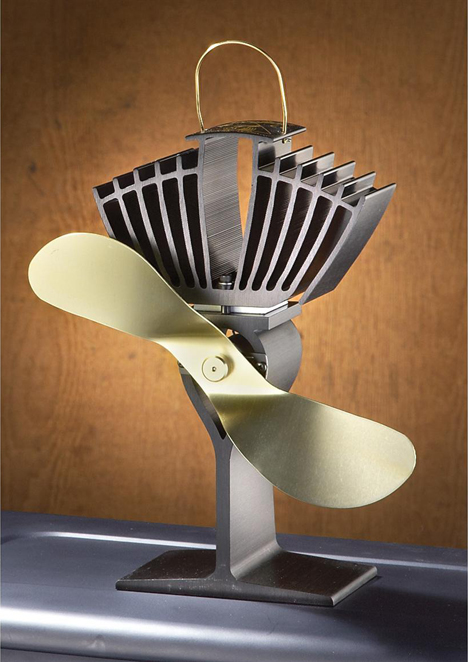
For those of you with woodburning stoves—I know at least some of you have them, either in your house or heating your shop—the Ecofan is a clever, energy-free way to help circulate the heat. You place the Ecofan on top of your stove, and as the stove heats up, the blades begin to turn, distributing the hot air into the rest of the room. The hotter your stove gets, the faster the blades spin, up to a maximum volumetric flow of 150 cubic feet per minute.
The Canadian manufacturer, Ontario-based Caframo, claims the better circulation means you'll have to burn less wood to keep the place warm. And unlike a conventional blower, the Ecofan is completely silent.
Now for the big quesiton—how the heck does it work? While there are several reviews by North Americans on YouTube, we'll let this British guy explain it to you because Brits generally sound smarter. (Except when they're burning our White House down.)
-
oFavorite This
-
Q5Comment
Directory Company Profiles

Core77
Industrial Design
Resources
Industrial Design
Resources
-
Core77 Directory
Find the Best Industrial Design CompaniesGo -
 Bruce Mau Design
BMD is a multidisciplinary brand and design studio. At BMD, we are here to move organizations forwar...
-
Artefact
Artefact is a strategy + design firm. Design is powerful. It determines how we experience life, and ...
-
Formation Design Group
Formation is a product design + development company focused on human centered design innovation. To ...
-
Pulse Design Group
Pulse Design Group is an award-winning product design and innovation consultancy located in Los Ange...
-
219 Design
219 Design is an interdisciplinary product engineering firm based in Silicon Valley. Our team of mec...
-
Sprout Studios
Sprout Studios is an award-winning, concept-to-launch design studio deeply rooted in technology and ...
-
Whipsaw
Whipsaw, under the leadership of design visionary Dan Harden, is a highly acclaimed strategy, indust...
K
{Welcome
Create a Core77 Account
Already have an account? Sign In
By creating a Core77 account you confirm that you accept the Terms of Use
K
Reset Password
Please enter your email and we will send an email to reset your password.
Comments
Cool,the fan is heat powered,no external electric needed. You can find good quality ones with much more competitive from China factory http://smartstovefan.com
I think the purely mechanical ones using a Stirling engine are much cooler (so to speak) http://www.vulcanfan.com/
I worked with a guy who developed a similar system for a local firm - http://www.woodsman.co.nz/products/ferva