Imagine, if you will, a design exercise in which the primary constraint is simply to answer a brief with ideas that have never been dreamt of. The themes range from Global Warming to Time, and are selected based on passion as much as relevance and timeliness, and as such, design teams are expected to come up with ideas that meet those criteria as well.
These are the guiding principles behind IDEO's "Designs On—," an ongoing internal project that has taken off since IDEO Associate Partner and Industrial Design Director Blaise Bertrand introduced it in 2008. The global design consultancy has just launched a dedicated microsite for the fifth annual edition, which tackles the seemingly mundane (or otherwise overdone) issue of Packaging. And while the topic is ostensibly more pragmatic than past themes such as Food and Birth (as well as the two mentioned above), it's not so much a departure from the spirit of the platform as it is an affirmation of its breadth.
The idea of "Designs On—," according to Bertrand, is to "let designers pick a personal perspective" on the topic at hand. The goal is "to push the edge of a particular content area [as well as] to constantly question our assumptions about design." IDEO employees organize themselves into teams as they see fit, developing, iterating and ulimately packaging their ideas over the course of four to five months.
"The 'Expired' concept is one of my favorites," says Bertrand. "It feels natural—to take a simple analogy of a banana, [which has] a very powerful emotional aspect."
Bertrand excitedly noted that "Biomimicry is a growing domain."
Since I made the observation about protecting one's cards in Myanmar and China, I've noticed another example of the personalized/expensive solution versus the one-size-fits-most/affordable solution that related directly to my research on resource-constrained approaches to mobility in China. The challenge was, "How do I protect myself/my cargo from the elements while driving my three-wheeled vehicle?"
In Jiangkou, a small and remote city in Guizhou province that is accessible solely by road, a thriving workshop fabricates cargo shelters and cab covers specifically for three-wheeled vehicles. I had spent some time trying to locate this shop, as its fame for producing high-quality covers had drivers traveling from as far as the next province over to have covers made for them. Depending upon the size, a custom cover costs between 700 and 2400 kuai (US $111–$382) and requires 6–14 hours of labor. The result is a durable shelter for one's three-wheeled vehicle, with the option to add several other security and performance-enhancing innovations, such as additional in-vehicle storage, electric windshield-wipers wired directly into the vehicle's circuits, and "lock-rings," as seen in this piece for Ethnography Matters.
Meanwhile, a different solution is available for the residents of Tongren, Guizhou, a larger city and the county seat. Tongren is linked by rail and highway to other cities and provinces, and is better connected than Jiangkou to the rest of the country. However, there exists no comparable means of getting a custom-fabricated cover for one's vehicle there. The only comparable service I was able to find was a repair shop that offers to attach a front cover to one's three-wheeled vehicle, modified (usually using a combination of a saw and power drill) to fit a vehicle's particular dimensions.
War story (n.) - A recounting of a memorable personal experience, especially one involving challenge, hardship, danger, or other interesting features.
-Webster's Revised Unabridged Dictionary
As field researchers, we face a dilemma. Our roles require us to interpret our findings carefully and to be perceived as competent and professional. Yet everyone who has done fieldwork for very long has been in those situations—sometimes funny, sometimes frightening, sometimes heartwarming—where things didn't go as planned and when even the best prepared of us has had to modify an approach or change a particular visit to "pull it out of the fire" from time to time. Yet it can be hard to share these experiences with our wider professional community in order both to find their meaning and to learn from them. There was never a forum for us to share our experiences and to learn from them.
Until now. A little over a year ago, esteemed colleague, friend, consultant and author Steve Portigal began an experiment. He solicited and posted "war stories" from field researchers around the world. He says that he didn't really know what would come of this, but the result has been a fascinating set of cautionary tales and hilarious, tender, interesting stories from the field told by and for an international audience of fieldwork professionals. As Steve introduced it:
We love stories, and in our work as ethnographers, we love war stories about fieldwork. These experiences—the crazy household, the dog that does his business on your shoes, the GPS failure—are inevitable and are often (at least in hindsight) hilarious. Exchanging these stories is a way of socializing our technique and creating learning opportunities for both tellers and listeners.
Based on his own experience conducting field research over the years, Steve is well aware that Murphy's Law is alive and well when researchers go into the field. Everything that can go wrong will go wrong, and even if you have brought multiple spares, extra batteries, cameras, etc., there's always something else to test your flexibility.
The themes of the 50+ stories currently available vary widely. This growing collection has great examples for those teach or who are learning how to do ethnographic research, as well as those of us who do or have done it. There are many lessons in them. Here are some of my biggest takeaways:
What really happens in the field?
Because roles in many firms are siloed, not all designers get to experience participating in a full-blown ethnographic study, up close and personal with a trained user researcher, this means that they may not see how it evolves over time. They may have a chance to do one or two visits, but that's typically not enough to get anything other than a superficial sense of the overall process, specifically the dynamic challenge of gathering all of the information a team needs. Because of this, some designers don't see the value of having a user researcher leading the effort of getting the vast amount of data that ethnographic studies inevitably generate. These war stories can give a flavor of how this happens over time and can help designers understand better what they can get from a good user researcher from time in the field.
Seemingly ubiquitous problems include but are by no means limited to: pungent pet smells, recruiting nightmares, inclement weather, and unsavory neighborhoods in which researchers find themselves, often at odd hours of the night. Many of these are hilarious. Some are poignant. All recount familiar circumstances that I suspect seasoned field researchers will recognize.
Core 77's excellent series Apocalypse 2012: The End Starts Here saw 'mild polemics' and lively discussions used to demonstrate and suggest new roles for design at the beginning of the end of time. But what about designing in the apocalypse? Or, more accurately, in places that do not enjoy the easy availability of first world design practice.
All over the world, or rather the real futuristic world we live in where everything is indeed made by hand, artisans continue to make things that are essential to culture, history and most important livelihood. The artisan sector is the second largest employer after agriculture in the developing world. It is the only cultural industry where developing countries are the leaders in the global marketplace, with trade totalling over $23.2 billion annually.
Current design approaches and systems are, to a very great extent, dissociated or disengaged from the needs of 'people-on-the-ground' and from the capacities of local production processes. Contemporary product aesthetics that fail to capture consumers' attention are a result and reflection of this sense of detachment and ill-advised development. In order to create products that are at once sustainable, locally meaningful and globally marketable, it is imperative to begin developing, or perhaps retrieving, these integral connections.
So what about designing in Haiti? Not with the assumption that the nature of "first world" design practise and problem solving is appropriate for all situations as frequently demonstrated by the continued use of developing countries as part of a vast outsourcing system of product manufacture. Instead, what about a commercial design project in Haiti?
Haiti: media whipping boy; poster child for poverty and chaos; site for the projection of our collective fears—it has endured both metaphysical and real slings and arrows. It was the first country to take independence through rebellion—Haitians ousted Napoleon and for their efforts paid billions in reparations to compensate France for its loss of men and slaves over the next centuries. They have endured trade embargos by France and the United States. Haitian Voodoo has been pilloried and stereotyped by Hollywood. And, of course, they have recently barely survived a devastating earthquake.
And through all of this, Haitian artistic culture has continued to innovate and adapt proving a robust challenge to our common exclusion of things on the edge.
Before beginning my Fulbright research in China, I had previously spent three years living and working in Yangon, Myanmar (formerly known as Burma). My time in Myanmar was formative: my firsthand observation of the extent that the country's residents relied upon tuolaji, their flexible and powerful tractor-like vehicles, to perform many tasks provided inspiration for my present research.
However, not all of the inspiration for what drives my research today came from the Myanmar's vehicles. During my time in such a resource-constrained context, I recognized the mixture of challenges and benefits that comes with relying upon many things to be handmade instead of mass-produced. While the Western world shifts toward coveting handmade objects as a sign of status and taste for craftsmanship, denizens of resource-constrained environments have no choice in the matter, and could benefit greatly from some of the very mass-produced goods that today's design-minded individuals tend to eschew. Although I knew this fact in the abstract, confronting this apparent contradiction up close made it obvious how much more costly it is to dwell in both a resource- and choice-constrained environment, where hand-crafted items are the norm rather than the exception.
Consider the things you carry with you each day. In Jan Chipchase's latest book, Hidden in Plain Sight, he identifies the most commonly carried objects around the world: keys, money and mobile phone. Besides these things, however, there is something else we always carry with us, whether consciously or unconsciously, and that is our identity. Most all of us are familiar with situations in which we must prove who we are, whether to obtain government services or benefits, gain access to a controlled area, verify identity in the case of legal sanction, and so on. While different contexts each have their own processes and differing degrees of formality for proving identity, the need remains nearly universal, and until technological solutions such as facial recognition are sufficiently widespread and accurate, identity will continue to take the form of a physical artifact—namely, a personal identification card.
The differences between identity cards—physical material, size, storage behavior, personal data, authentication mechanism, etc.—and the range of situations for which they must be shown comprises a common set of attributes to investigate across different contexts. Although an in-depth comparison of China and Myanmar's respective identity cards (and surrounding behaviors) is beyond the scope of this article, residents of both countries share the perceived need to protect their cards, whether for fear of damaging the ability to read the embedded chip in the plastic card (China), or to protect one's relatively flimsier paper identity card (Myanmar).
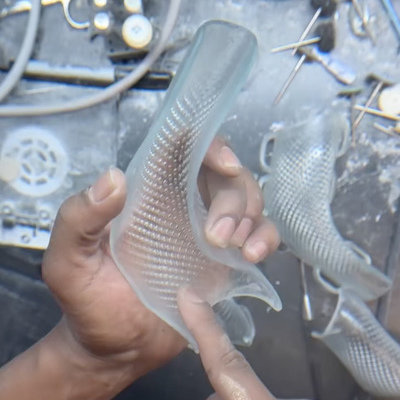
In Myanmar, individuals address the need of "How do I protect my important cards from being damaged?" with a custom solution. Plastic covers are individually crafted to each customer's document sizes, made directly in front of the customer by a single individual's hand, one at a time, using an elegantly simple, candle-powered tool. This solution is notable for both the amount of effort expended by the craftsman—which may seem excessive by an outsider's standards—to achieve the result of successfully protecting a single card. In 2012, this vendor was charging 100 kyat (US $0.13) to protect a single card. Technically, the craftsman need not create a bespoke, sealed cover for each document as part of his job, as there are only so many distinct sizes of identity card in the Myanmar context that require protection. However, he has no choice, given the materials that are available to him.
I'm pleased to share this excerpt from Chapter 2 of Interviewing Users: How to Uncover Compelling Insights. This part off the book sets up the overarching framework for successful interviewing: most experts have a set of best practices—tactics, really—that they follow. But what really makes them expert is that they have a set of operating principles. This ends up being more like a framework for how to be, rather than a list of what to do.
I've talked to a lot of practitioners about their own experiences in doing fieldwork and often they try to address challenges when they experience the symptoms, but that's usually not the right time. Consider this analogy: if you have insomnia, the best solutions are not those that you roll out at 3am when you can't sleep. To effectively counteract insomnia you have to make specific choices during the day, before you go to bed. Doing research with people is the same thing and ideally you approach this sort of work with a well-defined perspective that will inform all of the inevitable detailed, specific, tactical problem solving.
I think getting to this point as an interviewer (or for anything that we do at a certain level of both passion and expertise) is a journey. I'd love to hear about your journey or any other feedback or questions that you have!
* * *
When Wayne Gretzky apocryphally explained his hockey success as "I don't skate to where the puck is, I skate to where the puck is going to be," he identified a key characteristic of many experts: the underlying framework that drives everything. This platonically idealized Gretzky could have revealed any number of tactics such as his grip, or the way he shifts his weight when he skates. Keith Richards explains his guitar sound, which involves removing the 6th string, tuning to open G, and using a particular fretting pattern, as "five strings, three notes, two fingers, and one asshole." Even though Keith is explaining the tactics, he's also revealing something ineffable about where he's coming from. The higher-level operating principles that drive these experts are compelling and illustrative. Expert researchers also have their own operating principles. In this chapter, I'll outline mine, and I hope to inspire you to develop your own interviewing framework. As you develop, the process evolves from a toolkit for asking questions into a way of being, and you'll find that many of the tactical problems to solve in interviewing are simply no-brainers. As George Clinton sang, "Free your mind...and your ass will follow."
Check Your Worldview at the Door
I've been asked, "What was the most surprising thing you ever learned while doing fieldwork?" I scratch my head over that one because I don't go out into the field with a very strong point of view. Of course, I'm informed by my own experiences, my suspicions, and what my clients have told me, but I approach the interviews with a sense of what I can only call a bland curiosity.
As the researcher, it's my responsibility to find out what's going on; I'm not invested in a particular outcome. Even more (and this is where the blandness comes from), I'm not fully invested in a specific set of answers. Sure, we've got specific things we want to learn—questions we have to answer in order to fulfill our brief. But my hunger to learn from my participant is broad, not specific. I'm curious, but I don't know yet what I'm curious about. My own expectations are muted, blunted, and distributed. Although I will absolutely find the information I'm tasked with uncovering, I also bring a general curiosity.
Now, the people I work with don't have the luxury of bland curiosity. Whether they are marketers, product managers, engineers, or designers (or even other researchers), they often have their own beliefs about what is going on with people. This makes sense: if there's enough organizational momentum to convene a research project, someone has been thinking hard about the issues and the opportunities, and has come to a point of view.
Figure 1 - Capture everything that everyone thinks they know so that it's not stuck in their heads. Photo by Lena Blackstock (2012)
The Brain Dump
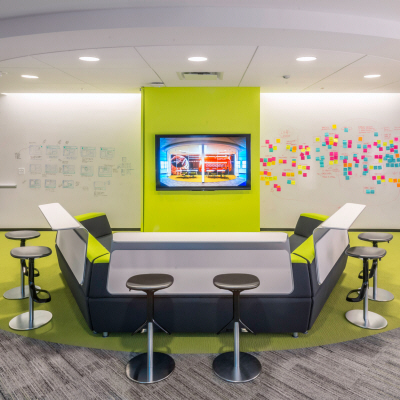
At the beginning of the project, convene a brain dump (see Figure 1). Get what's in everyone's heads out on the table. Whether it's real-time, face-to-face, in front of a whiteboard, or asynchronously across offices on a wiki, talk through assumptions, expectations, closely-held beliefs, perspectives, and hypotheses. Contradictions are inevitable and should even be encouraged.
The point is not establishing consensus; it's to surface what's implicit. By saying it aloud and writing it down, the issues leave the group specifically and enter an external, neutral space.
It's also not about being right or wrong; I encourage you to anonymize all the input so that people don't feel sheepish about expressing themselves. I wouldn't even go back and validate the brain dump against the resulting data. The objective is to shake up what is in your mind and free you to see new things. Think about it as a transitional ritual of unburdening, like men emptying their pockets of keys, change, and wallet as soon as they return home (Figure 2).
Figure 2 - Transitional rituals are actions we take to remind ourselves that we are shifting from one mode of being to another.
Around California, I've been seeing more and more solar panels. Solar panels installed subtly on people's homes. Solar panels on wireless keyboards. Solar panels atop lights. In such a sunny state, these solar panels make perfect sense.
On my return to northern Uganda, I started looking more carefully at the different ways people use new technologies, such as mobile phones and computers. But with an emergent civic infrastructure, access to the electric grid in the region remains limited. So while I was focused on how people used technology, I had to wonder: how do they charge their devices at all?
I soon learned that enterprising citizens in rural northern Uganda often purchase solar panels. They then offer phone charging services at a range of what I observed to be around 400–500 shillings per charge. That's about 20 US cents. The panels themselves, often coming from India and China, can cost as much as 200 US dollars, so it obviously takes a while to pay back that investment. But as one person told me, there is always someone who needs to charge his or her phone. Any freelancer can appreciate the value of a steady gig.
As small-scale renewable energy becomes cheaper, more reliable and more efficient, it is providing the first drops of modern power to people who live far from slow-growing electricity grids and fuel pipelines in developing countries. Although dwarfed by the big renewable energy projects that many industrialized countries are embracing to rein in greenhouse gas emissions, these tiny systems are playing an epic, transformative role.
One concept we'd like to highlight is called "Courses," and it eliminates the lunch line completely. Kids go straight to their tables, where the food is served to them by LRAs, one course at a time. Rather than getting one quick moment to choose a whole tray, the Courses system gives kids four moments to choose their dishes: carrots or broccoli, salad with dressing or without, chicken or tofu, apple or orange. And each moment of choice lasts as long as they need—there's no one waiting in line behind them. They can see what their friends are eating and feel supported when trying something new. Plus, each new dish brings a small rush of anticipation, greatly increasing the focus on food. The process allows adults to decide the order of the courses, so if they want kids to eat more salad, they can just put the salad first. (I've never seen kids get so excited about salad as they did with our prototypes!)
What's great about the Courses system is that it bears striking resemblance to something we're all familiar with: a restaurant. We simply had to apply that service to a new context. However, all services require people, and the people who needed to change their behavior the most were the LRAs. So we listened closely to make sure we were supporting their desired behaviors too. We heard that the LRAs' favorite part of their job was interacting with kids. They'd rather be chatting with a child than dishing food onto a tray. While the current system gives them one interaction point at the big serving station, the Courses system gives them four. They can be closer to the kids, and therefore more helpful, when they are out among the tables.
When we prototyped the concept with real kids and real food at AGC, we heard lots of positive feedback from students. They liked that the bowls were lighter and smaller than trays, giving them confidence when carrying them to the trash. They liked that the bowls gave them more elbow room at the tables. And they even liked that when they inevitably spilled their milk, it didn't spill into the tray and make their meal soggy.
But the most encouraging result of our behavioral prototyping came from something the kids couldn't tell us—something we observed in their eating behavior. It was an increase in eating balanced meals. Kids with trays often ate one, maybe two of the four food items. Kids with Courses sampled all four. Not only did they eat more and waste less, they ate more balanced meals—a metric that the public school system would actually care about, because it sounds suspiciously like health.
So the lesson for designers is to ask not only what you can make, but what you can measure. The only way this concept will be replicated at other schools is if we can prove quantitatively that kids eat more balanced meals, and that balance affects health. Measuring this is tricky, but we've just completed our study of balance pre-Courses. We intend to study balance with a trial of Courses very soon, and we're optimistic about the results.
Lesson 6: Design for every last barrier.
The physical elements of Courses are a collection of plates and bowls, long trays to hold them and a cart to bring them around the room. Sounds fine when you're talking about one table, but when you realize that you need 600 bowls, you start to discover the unintended consequences of this change. One thing that came up right away: how are
we going to do all these dishes?
The current trays are washed in 15 dishwasher cycles, which takes about an hour and a half. When we loaded our prototype bowls into the dishwasher trays and did the math, they would take 20 cycles, adding an extra half hour of dishwashing onto someone's job. We knew that this small issue might actually be the difference between the whole system working or coming crashing down. The final bowls and trays are designed to be shorter and flatter, making them more compatible with the current dishwashing system.
The lesson here is to go willingly toward every last barrier, and not stop until they've all been uncovered. After all, the reason that most social problems aren't solved is because there are barriers in place. Often really little, really stupid barriers. Decision-makers go for the big picture but forget the nuanced details. It's our responsibility to challenge those barriers head-on with our designs. Find them, understand what's really going on, and see if compromises can be made. Because we can't afford to sacrifice time and money and food and health because our bowls don't fit in the dishwasher.
A research report on the dynamics of crowd-sourcing music at the frog SXSW Interactive Opening Party, by Bonnie Reese, Mike Herdzina and Shaina Donovan—see Parts 1 & 2 for more information.
Crowdsourcing Gives Everyone a Voice
The overall response to the Crowd Sourced DJ was overwhelmingly positive. It was described as "novel" and people loved that it allowed them to participate in the music selection. When we probed further about what made it attractive, party-goers were enthusiastic about the philosophy of crowdsourcing, noting that it is a vehicle that gives everyone a voice. We were struck by the passionate tone and language of the participants. Some of the comments included:
- "It's for the community by the community,"
- "It's democratic,"
- "You have a chance to have a say"
However, while people embraced the spirit of crowdsourcing, many openly acknowledged that it compromised the quality of the output. We heard comments like:
- "The masses have bad taste"
- "I don't trust the public"
And yet those interviewed did not perceive the conflict between crowd selections and individual taste as an inherent negative. One music-savvy partygoer intimated that while the music being played did not align with his preferences, it still "fell within his range of acceptability." In the context of a large social experience, like a party, the spirit of empowering the crowd reigns supreme. Many people acknowledged the party context and noted that there's a time and place for everything. So while crowdsourcing is okay in one moment and social environment, it may not be appropriate for every situation.
Crowdsourcing Makes Everyone Think Like a DJ
So what were the biggest influencers when individuals had to make a music selection? First of all, people took into account the audience for the music as well as the party context. "Party music" was referenced almost as its own genre (although based on the range of musical styles we heard, we doubt that everyone would agree what the key characteristics of "party music" are). While many used the word "upbeat" to define "party music", we didn't see further alignment in the music played. One partygoer commented "What am I in the mood for? Something that will create the right environment. What will make the right environment? Upbeat music."
Overall, the music that was selected could be described as more "upbeat" on the music scale. (Click to view full-size infographic)
People also mentioned that they overrode their own preferences to choose music for the crowd, noting music as a "shared experience." One party-goer said, "I avoided a few songs that I wanted to play because I wanted to choose for the crowd," while another person noted "I think it is more important that the crowd has fun." People mentioned avoiding songs they liked that might bring "down" the mood. They continually referenced music's role in creating the right social environment: "The music affects the vibe—it drives conversations and relationships." These comments acknowledge the importance of music's role in shaping the experience for individuals and the crowd as whole. They also point to a party environment as a scenario within which the greater good should come before personal preference.
It was also interesting that when asked to state their opinion about the quality of the music (on our scale from "it sucks" to "awesome"), a number of people said that "it's like voting for myself," showing an identification with the crowd. This leap from crowdsourcing to an identity alignment with the crowd was very interesting. Crowdsourcing went beyond simply being a method to create a shared playlist to creating a dynamic of communal identification. One person even said, "It's democratic, so people will like the music," voicing an assumption that music chosen by the crowd will automatically be embraced by the people within that crowd. It's worth noting that there were no overall trends in perceptions about quality of the music from the data we gathered at our Music Perceptions Wall; where people placed their dots on the scale truly ran the gamut (and some partygoers just wanted to be clever about where they put their dot regardless of what they thought of the music).
What food did you hate as a kid, that you now love as a grown-up?
Mine was guacamole. I used to hate guacamole! My mom would make it fresh and serve it at parties, and I just thought it looked so gross.
Now, of course, guac is one of my favorite foods. I regret the years I spent missing out on all that awesome homemade goodness. Why didn't I just try it? It's so delicious! My point is that it's hard to remember what it's like to be a kid. Sure, we remember some of the major moments, but it's particularly hard to recall how we behaved in daily life. In the case study below, our main users were kids, and since we couldn't literally become kids again, we had to find other ways to understand them. As you read about the project, try to remember what it was like to not like [insert food you used to hate here].
Designing Everything but the Food
At Greater Good Studio, we use design methods to solve social problems. We work with foundations, nonprofits, government agencies and social businesses, often saying that our mission is to work with people on a mission. We take an asset-based approach to research and design, because in the social sector, unmet needs are almost too easy to find. Rather, we look for assets—the people, resources, behaviors, relationships and systems—that are already working well. Our designs leverage those assets to create more and better life.
We were recently awarded a grant to teach a class at the School of the Art Institute of Chicago (where my co-founder George is a professor). The project was to design an elementary school cafeteria, with a team of grad and undergrad students. I know what you're thinking: it's an architecture project, right? Well, we approached the challenge as designing the interactions between kids and food. While a cafeteria is literally a room with four walls, it's also a dance between lots of people and lots of things, most importantly, kids and food. To create a great cafeteria experience, kids and food have to interact in a way that is positive, healthy and fun.
Another way to frame it is that rather than designing the space, we are designing the behaviors within that space. If we can find ways to support new behaviors, and facilitate great interactions, we can create a user-centered experience without moving any walls...which we weren't allowed to do anyway.
Lesson 1: Don't know the answer until you know the question.
We started by framing our project around health. How can we design a cafeteria that encourages healthy eating? We were inspired by Dr. Brian Wansink, a behavioral economist from Cornell, who showed that simple cafeteria changes like placing the milk before the soda could have enormous impact on diners' choices. However, the healthfulness of school lunch is a subjective, politicized issue. And healthy food is no silver bullet: When Chicago Public Schools changed its menu to add healthy options, kids opted out! (And lunch ladies protested).
Most importantly, we are designers. We're not nutritionists, chefs, food scientists, farmers or supply chain managers. What can we bring to the table? We thought about our responsibilities as designers: to be action-oriented, to understand people on an individual level, and to think first about desirability, rather than feasibility or viability or "how this will do in opinion polls." Our expertise is in human experience, and so that's where our research began.
Observing lunchtime that first afternoon at Academy for Global Citizenship (AGC), the charter school where our project was based, we noticed one really glaring pattern: every adult in the room was trying to get kids to eat. They were playing eating games, "selling" the merits of various dishes, and straight-up pleading with kids to take one more bite. Our first reaction was, "They are working really hard at this!" And our second reaction was, "It's not even working." Kids were throwing out lots and lots of perfectly delicious food at every meal. We realized that rather than encouraging kids to eat healthier, the ideal cafeteria is one that simply encourages kids to eat—though, as any parent knows, that is no small feat.
The lesson here is to not assume the answer until you know the right question. There's a common criticism of design in the social sector—it's called "missionary design." Missionaries go to foreign cultures already knowing the "answers" to people's troubles. Rather than being missionaries, let's remember that the answers are in that place. So don't assume you know what to fix, until you know what is broken.
Music shapes our experience of the world—it sets a mood, represents who we are (or who we want to be), captures memories, and defines a moment. The decision to embrace crowdsourcing as the DJ concept for the frog party was a risk in many ways. Who knew what the crowd might choose? What vibe would be created? Would it bring people together or further highlight our separate identities and divergent tastes? It was a meaningful social experiment—not only in music curation but also in social dynamics.
In order to fully embrace the experiment, frog dispatched 11 researchers to collect data at the party about music, crowdsourcing, and social dynamics. This article will both share the findings and reflect on the process that we used to take advantage of this research opportunity most efficiently and meaningfully.
Defining the Research Plan
Looking at the experiences that had been designed for the party, we realized that there was one piece of data being captured without any work required on our part—the music selections on the TouchTunes smart jukeboxes and mobile app. The crowdsourcing process would simultaneously build a data set about music preferences across the course of the evening. But like any quantitative data, this could be made more meaningful by supplementing that data with qualitative interviews and contextual observations.
As part of this experiment, we wanted to explore how to most effectively use a larger research team in a short amount of time (no one wanted to entirely miss the party to conduct research). We allocated three hours of time from each of our research team members—one hour to ramp up, one hour of research and documentation, and one hour to participate in a storytelling session. We created data capture sheets that made it easy to see the script and write down notes and quotes quickly. In addition, we created "end of shift" synthesis sheets that allowed us to quickly capture emerging patterns about social dynamics and environment from the research teams conducting research during the party. Two researchers then took the data forward to craft into the key themes.
We cast a relatively wide scope for the research, using a few focused questions that allowed the team to adapt their focus as themes emerged and the party progressed. Some of the questions we decided to explore included: What do people think of the music that's being played? What motivates engagement in the music selection process? What do people think about the value of crowdsourcing over curation? What's motivating their music choices (or their decision not to participate)? Does participation impact perceptions of the music and party environment? How do social dynamics play out when a group is asked to make a decision that is driven by personal taste? How do people go about making their decision as to what to play?
In order to answer these questions, we engaged in a range of research activities—spanning from video capture to one-on-one interviews.
At frog, we often find ourselves conducting research in surprising places all over the world. Those of you familiar with our recent trip to Afghanistan will know that we conduct field research everywhere from private homes and businesses, to civic and social institutions, to very public spaces. When we're in the field, we like to create "pop-up" studios to facilitate rapid synthesis, ideation, and prototyping. Last month in Austin, we created a unique pop-up studio very close to home, at the frog SXSW Interactive Opening Party.
For thousands of SXSW attendees, the frog party is the traditional kickoff for an intensely social and inspirational week at the conference. It's their chance to blow off steam with friends and colleagues, and to get the creative juices flowing for the week ahead. By now people have come to expect that the frog event is not just an ordinary party, but a kind of social experiment, and a place to casually explore the meaning of technology in our lives. This year our theme was "The Other Singularity," or what happens to social life when we embed massive computing power in unexpected places, from coffee table books to porta potties.
I've been going to the frog party for many years and have enjoyed the playful and provocative technology experiences we create for our guests. In the run up to 2013, I realized we had a rich opportunity to gather thoughts and feedback about applications of this new technology with an enthusiastic and tech-savvy crowd. The inspiration for the research focus sprung from the Crowd Sourced DJ, which used TouchTunes smart jukeboxes (designed by frog and the TouchTunes team) and the TouchTunes mobile app to allow party guests to create and curate the party playlist in real time.
For the past 20 years, China has become an economic superpower by acting as the world's manufacturer. From boutique brands to major corporations, companies from around the globe have brought their products, concepts, ideas and innovations to be built and assembled in the factories of Shenzhen, Guangzhou and a host of other Chinese industrial cities. Meanwhile, neighboring Asian countries like Japan, South Korea, and Taiwan have been fostering cultures of creative entrepreneurship with government initiatives and media promotion.
In China, the movement is finally just beginning. This unique environment, combined with a growing middle class and a new wave of flourishing creative-minded Chinese has given rise to a nation of makers—local Chinese entrepreneurs with a passion for creating and selling their own products. In this essay, we take a look at the idiosyncratic nature of life as a creative entrepreneur in modern China.
Filling Gaps
Between its economic boom and booming population of 1.4 billion, China has become a sophisticated market catered to by all of the world's top brands. This influx of goods and services quickly filled all the gaps in fashion, entertainment, toys, and everything else that the new middle class of Chinese could then suddenly afford over the course of a generation. International brands such as Louis Vuitton and Chanel (and even Apple) gained traction for being high-quality symbols of status, while goods made in China were less and less desired.
Now, as the younger generation—those raised in today's more open and creatively inspired postindustrial China—are coming into their own, they have buying power. Anecdotally, there seems to be a newfound pride and passion for quality, home-grown Chinese products, a sentiment some entrepreneurs are now tapping into. Token Hu, a former designer at frog, manufactures and sells his own brand of casual lifestyle shoes. Although many international brands have a strong presence in China selling shoes of this kind, Token saw a unique gap in the local market and set out to create his own brand, UNITED T. Made in China—or at least "making in China"—is becoming cool.
Getting Things Made
In certain disciplines, China's 5,000-year-long history of traditional art and craft culture can be an invaluable resource for excellent creative talent and handmade manufacturing. Taiwanese-born Guo Hong Zhi, a successful restauranteur was looking for a source of custom-designed ceramics in 2004 to use in his highend restaurants in Shanghai. He went in search of artists from Jingdezhen, the heart of Chinese ceramic arts for thousands of years, where the most talented aspiring ceramic artists come from all around China to study and learn from the masters. Using samples from Japan, he solicited work from the factories there for about one fifth of what it would cost in Japan. The results were discouraging, with only 5% of the products coming back without flaws.
Thus, Guo decided to set up a design facility in Songjiang, a suburb of Shanghai, where he could invite students from Jingdezhen to work under his personally trained process engineers. Within two years, his operation was not only producing beautiful dishware for his restaurants, but had drawn enough creative talent to sustain a line of very successful ceramics shops called Spin, selling to the public in Shanghai and Beijing. The studio gives local talent an opportunity to explore a more expressive, modern style while they hone their classical skills. This form of culturally sustainable manufacturing is a compelling example of how Chinese design entrepreneurs can create modern Chinese products while still tapping into traditional Chinese culture.
Is it possible to make a government services site useful for citizens seeking information? Ben Terrett, Head of Design at the Government Digital Service, not only thinks it's possible, but believes it might be the world's best brief. In 2011, the British government established the Government Digital Service (GDS) within the Cabinet Office. It was established as a direct response to a government-commissioned survey conducted by Martha Lane Fox that recommended that the government strategy be "Digital by Default," along with key tenets to overhaul the public-facing websites that served as portals for government services and information.
The key concepts as outlined by Fox included:
- Establish a digital team in the Cabinet Office with absolute authority across all government online services.
- Fix Publishing - With over 2000 websites for citizen needs versus business links, departmental and public bodies with individual websites.
- Fix Transations - For people who pay for services online
- Go Wholesale - opening up APIs to third parties
By October 17th, 2012, the GDS launched GOV.UK, a single portal to access governmental information as a citizen or a business. A month later, the team began folding over 400 departmental agencies. To date, 14 out of 24 ministerial departments are live on gov.uk along with 17 of over 300+ public bodies within the department. In the video below, Ben Terrett chats with Willy Wong, Chief Cretive Officer of NYC & Company, New York City's marketing, tourism and partnership organization. Ben shares about designing for user needs through simplification, the history of British public design as well as the GDS' plans for opening up information to third parties.
The ones that shape, mould and refine our methods, allow us to iterate on how we think about what we do—the operational things that help us get stuff done better, faster, smoother.
And then there are those projects.
Those projects shape us and our team, they expand our world view, open minds to new ways of thinking, bring our short existence into sharp focus—they remind us that our time on this planet is too fleeting to devote to things that are no sooner done, than forgotten.
Those projects make us question our beliefs, our career goals, who we work for, who we work with (and who we want to work with), and where we want to devote our energies for the next few years.
It's those projects that rapidly evaporate any tolerance for bullshit.
They remind us of what we've let drift, and provide a rough hand to steer us back on track.
They are the essence of a life well-lived.
Everyone has their own criteria for what makes one of "those projects." For me, they often include heart-in-mouth, will-we-or-won't-we-make-it moments where the cost of failure is absolute, where fear stalks and somewhere along the line hearts leap, and tears are shed. They generate experiences that can't be unlearned and are in no danger of being forgotten.
Do you want to live?
Prove it.
Photo: A short experiment in priming a large group for an otherwise socially unacceptable behaviour, taken in a higher risk environment.
This article summarises the issues in conducting corporate ethnographic research in rural locations covering logistics to research dynamics. Rural communities are far from homogeneous.
Compared to more urban settings, rural dwellers tend to have a more polarised expectation of "outsiders." (The "outsider" label may be designated by any number of factors including nationality, skin colour, accent, place of birth, caste, the list goes on. In Afghanistan, "foreigners" can include anyone from outside their province). Interactions with locals will be framed by their touch points with outsiders—whether aid workers, missionaries, NGO staff, backpackers or television, and slowly but surely entrepreneurs.
How might the dynamics of an interaction change if a local villager's only experience with a blonde female came through Baywatch? For example, I've been in interviews where male perceptions of foreign women is shaped by their porn consumption. My principle is that the team only needs to find one person in a community to be able to build out a meaningful local network, so the only question is finding that one person. The research is rarely about finding statistically representative participants but rather people that that fit within relatively broad criteria. Leave room for interesting outliers. A good team knows how to turn the outsider status to their advantage (or at least minimise negativities) using this status to gain access.
Research doesn't always flow well and it is natural for interactions or requests for interview to be rejected. In urban centers, there are plenty of opportunities to move the team to another location even in the same neighbourhood. In rural location, the ripples of rejection can spread, tainting the team within the community and forcing them to move on.
Rural locales tend to have lower levels of literacy, especially regarding females, who generally have less formal educated than males—if there is not enough money to educate all of children girls are the ones that receive less investment. Literacy can become an issue when it comes to consent, since participants are asked to sign a document that must be communicated orally, which in turn puts a greater onus on the team to communicate appropriately. In my experience, this can take a matter of seconds or upwards of half an hour. The participant's welfare the primary concern: The team should devote whatever time is required to ensuring that the consent is understood to ensure that consent is informed. My priority is participant first, team second, client third—and keeping to this eventually does the best by the client. Similarly, when a model release is being obtained (allowing external use of data including photos), the research team needs to exercise an additional moral pass to ensure that data (mostly photos) is used in the spirit in which the data was obtained.
This article summarises the issues in conducting corporate ethnographic research in rural locations covering logistics to research dynamics. Rural communities are far from homogeneous.
Over the last decade I've seen an increasing number of multinationals target highly financially constrained consumers in countries like India, China, Brazil, Nigeria and Rwanda (where these pictures were taken) reflecting both a wider awareness and appreciation of business opportunities of this market segment. The very particular ethical issues of working in financially constrained communities are covered in this essay, and suffice it to say, these consumers are arguably some of the most demanding consumers on the planet. Given that these countries have significant agrarian populations, how does ethnographic, corporate rural research differ from similar contextual research conducted in urban settings?
* * *
A "rural" community spans a significantly wide diversity of peoples, cultures, faiths and ethnicities. The infrastructure can vary considerably from dirt roads to paved, electricity to off-grid, cell towers and data connectivity, water from jerry cans or the mains. A single farming community can encompass a wide range of incomes from subsistence living through to satellite TVs and four-wheel drives. The size of farms; the crops that are planted, the livestock that is tended; the extent to which agricultural or husbandry expertise is available; whether it has been a good season; the timing of the next harvest; flows of knowledge and income relating to the level of urban or international migration (especially near border areas); access to credit; can all have an impact on who the research team will engage with, and how the research will be conducted.
The first issues arise during the project planning and relate to logistics.
Logistics
Assuming the country has already been selected, how to choose one rural location over another?
Tapping the knowledge of organisations that already operate on the ground can help feel out the nuances of different geographic regions and can provide invaluable advise on access, introductions and existing authority structures and provide a sense of who is already doing what on the ground. An organisation's willingness to share often includes an element of quid quo pro with the promise of some form of share back at a later date—this spirit is not always apparent in commercial projects.
Before the team arrives, Google maps and its ilk are good for remote sensing a country to understand the type of roads (asphalted, dirt) the dynamics of a city, town or village right down to the type and density of neighbourhoods, homes, communities, farms. Backed up by analogous on-the-ground experience satellite images can be very effective at cross-checking other data sources. Commercially available photos from satellites or planes can be obtained if the team requires something specific, including very high resolution imagery. Having a sense of the terrain helps focus the research planning and provides an early taste of 'being there', especially useful in acclimatising team members that haven't travelled to the region.
A frog team spent a week in Cairo for client research, workshops and keynotes shortly after the revolution. Our team of six worked out of a downtown hotel, syncing with three local guides over breakfast, before hitting the streets. It's good to have time to calibrate to the city, especially one that has gone through so much disruptive change—there's freedom in the air, and most people that we've spoken to recognise that the hard work in building what-next is yet to come. Tahrir Square is alive with the sounds of debate, face painted kids, and the detritus of protest.
A critical aspect of any project is the ability to set and manage expectations, which is often framed in terms of clients wants and needs. The week in Cairo comes with another set of expectation setting—helping colleagues and family understand what the team is up to, and appreciate that the news headlines represents a tiny sliver of what is going on the ground. I'm not surprised at the number of emails expressing concern, and I know how easily events in a far away land can spiral into a cycle of rumours that elevate danger and risk.
A long time ago, I realized that you should never ask the question to someone in the organisation if you're not willing to listen to and act on the answer. The consequences of questions about security in any organisation is that someone's job is (ostensibly) on the line if things turn south—and organisations are inherently risk averse. This is a problem if the decision makers don't understand the risks on the ground—hence the need to be proactive about setting the tone of the conversation.
How do you feel when you're asked to do travel somewhere interesting but that carries a slightly higher risk of injury, kidnap or death?
I've run a number of studies to "lively" places, that carry with them a different risk profile than one normally encounters on corporate research. In each case I've needed to pull together a team that can stand up to the technical, physical and emotional rigours of the work. This is what I learned about "the ask".
The practical aspects of planning a short (~1 month) study in higher risk environments are relatively straightforward to pull together, but many are less-unprepared for the emotional highs and lows before, during and after the field study.
Before Going In-field
1. Elation at being asked, at the potential. Nobody says no to a travel adventure.
2. Realization as information is gathered, newspaper headlines are scanned the enormity of perceived risks sink in, the worst-case scenarios mentally play out. The lows are amplified by how it is communicated to peers/friends/family during stage (1). This is when the person who initially said yes changes their mind.
3. Normalization: more nuanced media/opinions are gathered, conversations with people in the know, on the ground, a better understanding of geography, place, the risk is put into perspective, bad headlines no-longer trigger deep lows. the researcher comes to terms with the idea of what it means to be there.
4. Occasional panic attacks: things that sneak up on you: a misread headline; an idle thought; a sense of what could be lost.
The study, In the Hands of God (1.4MB PDF), explored the strategies adopted by salaried Afghans for mitigating financial (or more accurately asset) risk, the role played by extended families in levelling out drops in income, and reflects upon what this means for more formal financial services and the future of Afghanistan.
We also wrote up some thoughts on running research in higher risk environments, strategies for mitigating risk, and coping with extreme gender dynamics.
Jan and Mark will be speaking to the research at the World Bank in Washington DC, at an event hosted by CGAP on the 28th February. To join RSVP here.
* * *
frog presents In The Hands of God - Insights on ethnographic research in some of the less predictable places of the world:
Frog Senior Design Researcher Cara Silver conducted field research in Afghanistan to investigate topics around risk and savings and their intersection with mobile banking. She worked with a nimble team including Executive Creative Director of Global Insights Jan Chipchase and Chief Creative Officer Mark Rolston, and with support from the Institute for Money, Technology, and Financial Inclusion.
A mixed-gender team of three researchers and four local guide-fixers conducted mobile finance research in Afghanistan over two weeks in December 2012. The goal was to investigate topics around risk and savings and their intersection with mobile banking. Discussing money—and who in the family influences spending—was a key question, and one that required the team to both play with and against the often siloed gender roles in the region. Navigating these gender dynamics was top of mind for all members of the team to both ensure safety and gain access to both sides of the story.
The team planned to spend four days in Herat and the remainder in Kabul. These locations were chosen as being both culturally distinct and sufficiently secure. As the economic center of modern Afghanistan, Kabul carries a large international influence, both government affiliated and independent, and harbors the security tensions to match. It is seen as a safe zone for those associated with government work, like the Afghan National Army (ANA) and Afghan National Police (ANP), who often settle their families in the city and return to the provinces to work. Herat lies in the west of Afghanistan and is less than a two hour drive from the Iranian border. Traditionally, a high volume of migrant labor has traveled to Iran to earn money to send back to families in Afghanistan. This cross-border human traffic brings with it both cultural, political and commercial influence, reflected in everything from the goods on store shelves to investments in local infrastructure, and to the dress and behavior of women outside the home.
Risk is an issue in every country where we run research (mostly in the form of vehicle accidents), but it is elevated in Afghanistan, where there are occasional attacks, suicide bombings, and kidnappings. The challenge for the team in determining risk—and developing strategies and tactics to mitigate that risk—was in looking beyond the dramatic headlines and the established and stringent security protocols for organizations that need to operate on the ground for extended periods of time, gaps in our own knowledge, and processing events on the ground as they unfold.
It is not our purpose to overstate the more adventurous aspects of this research and we recognize that there are people living and working in Afghanistan under far, far riskier conditions, not least the Afghans themselves. With that in mind, we hope that some of you will find this discussion useful.
The perception of risk varies from context to context over the course of the research day. The general sense on the ground (and from Jan, who has researched in Afghanistan multiple times) was that the security situation has progressively become worse. Several of our translators reinforced this impression, saying, "2010 was the best year in recent history. Now, with the news that the United States will pull out, people have less hope. People stopped investing in the future. Construction has slowed, and families are pulling daughters out of school. Things are getting worse."
The cornerstone of our research strategy was to maintain a low profile: with no security detail to draw attention, travelling in local taxis (rather than SUVs normally used by NGOs and contractors). We used motorcycles on photo-shoot days, when we needed to cover a broad swath of the cities and the photographer/researcher needed to get in and out at speed—with the researcher in near-to-local dress that would survive the squint test. The team avoided buildings, people and convoys that were military or military-contractor related, when these were known (it is not always apparent). The risk from IEDs, or improvised explosive devices, was considered low because of the unpredictable nature of our routes, the use of local transport, and limited cues suggesting that foreigners were riding inside. However, in today's age it is relatively easy to look up background information about an individual, including his or her employer, job title, and salary range, assuming they are transparent about their employer, i.e. through business cards, and travelling on their own passport. Our goal was to be not particularly interesting targets.
In the coming week we'll be publishing posts by frog's researchers drawing on their experience of working for commercial and non-commercial clients in some of the less predictable places of the world: Afghanistan; post-revolution Egypt; Rwanda; Burundi; Brazil, Ethiopia; South Sudan; India and China—the list of countries is extensive, the global insights team ratchet up more than 150 projects a year across industries— financial inclusion, healthcare, automotive, fast moving consumer goods.
In this series, the posts are written by Jan Chipchase, Cara Silver and Mark Rolston to coincide with the publication of their new report: In The Hands of God: A Study of Risk and Savings in Afghanistan that explored issues related to the design and adoption of mobile money services. As you might expect from a country at war, Afghanistan is very much an outlier, but as such it can reveal behaviours that are far more difficult to spot elsewhere in much the same way that lead users are different from mainstream users. It's a journey that revealed the best and worst of humanity: from the family bonds, trust, betrayal and even an attempted kidnapping.
Ivan Mworozi delivers the winning pitch for E-Ride, a new mobile rideshare program being developed at Mara LaunchPad. Image courtesy Mara.
It's a busy, buzzing weekend at Mara LaunchPad. Nigel Ball, the director of Mara, is circulating amongst the crowd, as are a half dozen mentors, including myself. It's a scene that would be familiar to any tech observer in New York or San Francisco... but this isn't either city. In fact, it's not even in North America: The first weekend-long Mara Business Hackathon has just begun in Kampala, Uganda.
Mara LaunchPad, operating under the social business Mara Foundation, is one of Kampala's premiere business incubators. Along with other tech-oriented spaces like Hive Colab and the Outbox Hub, Mara offers office space, mentorship and even venture capital to new startups in Uganda. Many of these businesses often focus on new technologies.
Mentors Evelyn Namara and Daniel Stern advise during the busy hackathon. Image by the author.
What made this hackathon different from many of the popular tech events in Kampala was its focus on building a business. Yes, a prototype and good design were key, but what was more important was that teams developed a solid business model and financials—not an easy feat at all, given the dire need for reliable data in the country.
"In 48 hours our idea matured in away that would [normally] have taken us weeks or months," noted Ivan Mworozi. "The access to experts from various fields was invaluable." Indeed, Mworozi cited the mentorship as key. He delivered the hackathon's winning pitch for E-ride, a new service he and four others will be developing to facilitate transportation in the traffic-clogged city.
Observing that an informal system of car sharing already exists, they wanted to streamline that method using mobile technologies: "Lot of cars and trucks were moving around practically empty because they had no way of know[ing] that we were looking for them."
Second place for the hackathon went to MyProperty, a new service being built by Daniel Olel and team. Just as E-Ride addressed an existing problem and practice and streamlined it, MyProperty aims to connect buyers and sellers of properties around Uganda. As Olel, noted, many middle class Ugandans rely on brokers. Anyone looking for an apartment in New York knows how pricey middlemen can be, and Olel's goal is to use MyProperty to cut out the middleman and build trust among buyers and sellers (quite similar to RentHackr, which I reviewed last year).
We've all seen it: the teenagers with one earbud in, feigning interest in conversation; iPad users brandishing the device like a radiation barrier to snap a photo; the veritable hypnosis of the "cell trance." In fact, maybe you're reading these very words on your smartphone, killing time in line while you wait for the next express train or your double-shot skinny latte. No shame in that—we all do it.
These behaviors and over 20 other digital gestures are duly catalogued in a research project conducted at the Art Center College of Design by Nicolas Nova, Katherine Miyake, Nancy Kwon and Walton Chiu, in July and August of last year. The four published their findings on our gadget-enabled society in an ongoing blog and a book [PDF] as of last September. "Curious Rituals" is nothing short of brilliant, a comprehensive index of the gestures, tics and related epiphenomena organized into seven categories of vaguely anthropological rigor. (The authors also extrapolated their findings in a short film of several hypothetical not-so-distant future scenarios, which I found rather less compelling than the book.)
While the blog illustrates their process—along with related videos and imagery—the final report, published under a Creative Commons Attribution-NonCommercial 3.0 Unported License, offers an incisive examination of "gestures, postures and digital rituals that typically emerged with the use of digital technologies."
Regarding digital technologies, [this endeavor shows] how the use of such devices is a joint construction between designers and users. Some of the gestures we describe here indeed emerged from people's everyday practices, either from a naïve perspective (lifting up one's finger in a cell phone conversation to have better signal) or because they're simply more practical (watching a movie in bed with the laptop shifted). Even the ones that have been "created" by designers (pinching, taps, swipes, clicks) did not come out from the blue; they have been transferred from existing habits using other objects. The description of these postures, gestures and rituals can then be seen as a way to reveal the way users domesticate new technologies.
Dan Hill of City of Sound sets the stage with a number of own observations in his fluent introductory essay. The designer/urbanist/technologist sets the stage by taking a casual inventory of gestures from the "wake-up wiggle" (impatiently jostling a mouse to awaken a sleeping computer) to iPad photography (which "feels awkward and transitional") and instant-classic iPhone compass calibrator (later referred to as the "angry monkey"). I'd add that this last gesture looks something like twirling an invisible baton or fire dancing—or, incidentally, 'skippable rope' from Art Hack Day.
For his M.A. thesis in industrial design, Norwegian designer Thomas Larsen Røed worked with a forward-looking transportation initiative known as the Scandinavian 8 Million City. Backed by governments at the local, regional and national levels, as well as the EU, the project is a detailed proposal for a high-speed rail corridor that runs south from Oslo down the Swedish coastline to Copenhagen, Denmark. Between the two capital cities and two Swedish metropolises in between—Göteborg and Malmö—the 600km span is home to some eight million residents (over 40% of the total population of Scandinavia) and the similarly significant percentage of the region's business and commercial interests.
The website is a bit short on information in English, but a 44-page PDF provides plenty of context and data to the proposal for the "Corridor of Innovation and Cooperation" (COINCO for short). The document makes a strong case to build a multinational high-speed rail line by 2025 site, for which Røed has developed an original train design. In his own words:
I want to contribute to the HSR vision through industrial design and this diploma project. The aim is to create a HSR concept based on Scandinavian values. This includes a focus on exterior design and building a brand identity foundation. By materializing all the ideas and reports that already exist, I believe people will find the whole vision of a Scandinavian HSR more tangible and realistic, which hopefully would make them express their support—something that is essential when trying to realize a big project like this.
By exploring Scandinavian values and identity, I want to create a concept with a distinct form and expression where technical aspects and requirements of the design meet Scandinavian culture and identity.
Just to create and/or contribute to the debate of future mobility would be a valuable end result—and for this reason, the concept might benefit from being somewhat provocative rather than a generic high-speed train.