Over the next few weeks we will be highlighting award-winning projects and ideas from this year's Core77 Design Awards 2012! For full details on the project, jury commenting and more information about the awards program, go to Core77DesignAwards.com


- MTN Approach backcountry accent ski
- Designer: Cory Smith, John Kaiser, Bob Carrasca, and Tyler Swain, Pillar Product Design LLC
- Location: Seattle, WA
- Category: Consumer Products
Award: Professional Notable

The MTN Approach system is the first ever hinged back country ski that allows you to fold and store into the space of a conventional backcountry day pack. The system is lighter, faster than conventional split board systems as well as other climber skis on the market. Our focus was the collapsible binding system design.

What's the latest news or development with your project?
The MTN Approach Ski system had their initial production release in June 2011. The product was first introduced at SIA (Ski Industries of America) in Feb 2011. Since that time frame the MTN approach System has received numerous acknowledgments and awards from SIA, ISPO and multiple industry specific magazine ads. The latest news is the excitement and support of top pro snowboard athletes in the industry who are using this system. It is the greatest honor when pro snowboard athletes are on your product because they see the benefit and a tool that allows them to push their skills as well as access completely new terrain. It is a good feeling when pro athletes want to be on your product not because they are being paid but because they see the ultimate benefits of this innovative system. MTN Approach System has reached out to new countries from Norway to Argentina. It is really amazing how quickly this system is gaining momentum. See more on our blog.


What is one quick anecdote about your project?
When developing the MTN Approach system with owner Cory Smith, we were constantly faced with budgetary and timing constraints. The typical issue of having very little money to get this product off the ground combined with even less time to bring it to market. I realized that Cory was in for the long haul and dedicated to making this idea a reality when he sold his 4WD Toyota truck that he used to commute to his day job at Smith Optics to pay for design and development work that Pillar Product Design had embarked on. So I don't know if Cory ended up taking the bus to work every day for a period of time, but it really showed all of us how important this ideas was to him and that we needed to do whatever it took to make sure we developed the best system we could no matter how long the hours and commitment level.
What was an "a-ha" moment from this project?
Many patents came out of the development of this product. The one a-ha moment that the Pillar Product Design team specifically came across was when we were working on the binding system and we developed a fold-down heel loop design. Many of the challenges with this product included: weight, strength and making the unit as compact as possible. We really started looking at unique folding mechanism from a multitude of in and out of the industry. As we evolved the heel loop system and explored new mechanisms, we were able to create a simple system that allowed for foldability, low-profile nesting and infinite size adjustability. This new mechanism allowed MTN Approach and Pillar Product Design to receive a joint utility patent.


Over the next few weeks we will be highlighting award-winning projects and ideas from this year's Core77 Design Awards 2012! For full details on the project, jury commenting and more information about the awards program, go to Core77DesignAwards.com


Lytro Light Field Camera
Designer: NewDealDesign
Location: San Francisco, CA
Category: Consumer Products
Award: Professional Winner
Straight out of Stanford's research labs, the Lytro Light Field Camera is the first consumer Light Field Imaging camera. It's an Icon for a new era, celebrating the most significant technology shift in photography in decades. Lytro captures dynamic vectors of light to create 'Living Images'; images that contain the color, intensity and direction of all light-rays in a scene. The results are photos that can be focused infinitely after they are taken. Derived from the gesture of viewing a kaleidoscope, the 'extruded-lens' form is supremely clean—shrinking what took an advanced imaging-lab into the palm of your hand. As Gad Amit explains in the Q+A of his winning entry:
Our team set out to match the innovative technology with an equally innovative approach to design by not taking anything for granted. Current camera devices are steeped in antiquated gestalt, born of reflex cameras with the need to house mirrors and film. Despite evolving to digital, the industry kept the slab with the pointy lens —we recognized Lytro as a chance to evolve this entrenched paradigm. We set the goal at creating the most iconic and pure design for this groundbreaking technology within the given timeframe, budget and hardware constraints. This notion was applied ground up and driven by the long cylindrical lens that was essential for the device's performance. We were approached to re-skin a component bundle, our answer was to tear it down and re-build it into an Iconic object that re-defines the camera as the world knows it.

How did you learn that you had been recognized by the jury?
A Monday morning email as I arrived to the office and settled in. Great way to start the week.
What's the latest news or development with your project?
Lytro is doing wonderfully in the market. The camera and technology has received coverage and praise throughout the media and been raved about by users. Lytro rolled out support to Windows machines in the last week and is continually updating the software to make the camera more and more advanced. They have more exciting things in the works, stayed tuned..
What was an "a-ha" moment from this project?
Our "a-ha" moment came with a simple fingernail sketch showing board and lens layout. This encompassed the technology for us; used space in the most efficient way and created a simple, iconic and usable object. From this sketch we were able to develop an entire Product Architecture for Lytro, for product to interface—is it cliché to say it helped everything fall into place?


Posted by
Perrin Drumm | 31 Jul 2012
|
Comments (0)

In February this year Nike introduced the Flyknit, its running shoe for Olympic athletes. Weighing in at 5.6 ounces, it's a whopping 19% lighter than their shoe for last year's marathon runners in the men's 2011 World Championship. The virtually seamless, mesh-like body is the result of a radical new process that can create an entire shoe upper, including the tongue, from a single knit structure. When Tony Bignell, Nike's director of footwear innovation, asked athletes what they wanted in a shoe, their answer was: a sock. "A sock fits great, feels snug, goes unnoticed and you get no irritation," Bignell said. "So the idea was, how do you engineer a sock into a high-performance shoe?"
Bignell and a team of designers and engineers spent four years developing brand new software and machinery to answer that question. They tested out a wide array of materials, eventually choosing "a feather-light, high-quality polyester yarn of varying elasticity, durability, thickness and strength." Cables that expand and contract with the motion of the athlete's foot are woven into the shoe to give it structure, and a Lunarlon cushion sole provides support.

This isn't the only technological breakthrough Nike has introduced to its Olympic line up, but it's design is strikingly similar to the eleventh-hour Adidas entry, the adiZero Primeknit. Adidas announced that they had been working on the shoe for the past three years but it was slipped into the Olympic lineup at the last possible moment—Thursday July 26th on the eve of the games. Its seamless, mesh structure is so close to Nike's design that Matt Powell, a footwear analyst with SportsOneSource, commented that "Adidas told me they were working on a similar technology to FlyKnit, but I had no idea it was this similar."
continued...
Posted by
Ray | 20 Jul 2012
|
Comments (0)

Always curious to give a new backpack a try in my quest to find the perfect bag, I didn't think twice about agreeing to review Booq's "Mamba Shift" when they reached out to us several months ago. Only afterward did it occur to me that there are actually two kinds of perfect bag: the go-to, everyday pack that becomes an extension of one's body, and those that fill—or rather, can be filled to serve—a specific need, patiently awaiting their intermittent calling, at which point they will humbly fulfill their duty (i.e. a frame pack). Read on to find out if the Mamba Shift proved itself worthy of that elusive upper echelon of faithful utility.

My first impression of the Mamba Shift was that it looked pretty slick—judging a Booq by it's cover, perhaps—with its unconventional vertical detailing on the front, which is bisected by a seam that runs the length of the panel. A pop color peeks out from the top half of the split, concealing the functional pleat of the expandable front pocket. The pocket is big but the zipper is a little awkward, as it runs along one of the two slightly curved seams along either side of the centerline; it's also hard to see what's in there. (Similarly, diagonal stitching conceals a slash pocket on either side, their openings limned by red piping.) The general aesthetic is minimal but still a little overdesigned for my taste.
The front pocket is also lined with the pop color
Personal preferences aside, the materials and construction exude 'premium product': the 1680 denier nylon feels largely impervious to the elements and the Mamba Shift feels entirely sturdy, albeit a bit heavy at three pounds. The Mamba Shift boasts substantial padding throughout, and the Nylex-lined laptop pocket, in particular, accounts for some of the weight: it's incorporated between the main compartment and the back of the bag, like a giant laptop sleeve (indeed, a separate sleeve would be overkill). A foam pad between the laptop pocket and the breathable Airmesh padding adds a bit of structure to the backpack. No complaints here: it's easily accessible and feels safe, even cozy.

The turtle shell-like exterior of the bag belies its highly partitioned interior: the main compartment is divided into no less than ten pockets, plus a removable nylon pouch. Lest it seem like that Booq design team has lined the inside of the Mamba Shift with as many pockets as they possibly could, each one is a slightly different size, material or dimension. While it's at the consumer's discretion as to what, if anything, goes in each one, the sheer number of permutations—nylon or mesh lining, velcro or elastic enclosure—seems a tad superfluous.
The slash pockets are split into four, with the dedicated pen and business card slots at left; the opposite face of the compartment (bottom of the picture) has the other five pockets
The abundance of pockets certainly presents a variety comfortable homes for cords, tablets and other periperhals, but bulkier objects pose a problem: a DSLR fit best at the bottom of the main compartment, which can be difficult to reach when you've loaded up the upper pockets (I was also baffled by the decision to put dedicated business card and pen slots near the bottom). Nevertheless, the zipper runs along a full three-quarters of the Mamba Shift, enabling easy access when completely open—flaps of nylon prevent stuff from spilling out the sides—but the usable volume is limited by the stiff exterior panels, which offer extra protection at the expense of capacity.
continued...
Posted by
Perrin Drumm | 17 Jul 2012
|
Comments (1)

Even as TVs get flatter, thinner and lighter, Bang&Olufsen's new BeoPlay V1 TV is the most streamlined option on the market. With four innovative new mounting options—floor stand, upright table stand, wall bracket and ceiling bracket—it's designed to fit any lifestyle and any space. Designer Anders Hermansen was apparently inspired by origami to create a body for the TV made of only two sheets of powder coated steel, folded together like paper. The floor stand or wall and ceiling mountings are equally unobtrusive, as is the universal Beo4 remote, which can control DVD, Blu-ray players, Set-top boxes, NAS drivers and Apple TV, which mounts in the back.

Samsung makes the screen panel (100 Hz on the 32” model and 120 Hz on the 40”) with full HD 1080p, Edge LED backlight and an automatic picture control sensor that "enables the screen to adapt to lighting conditions in the room to deliver optimal performance." As far as sound goes, B&O's proprietary ICEPower amplifier provides integrated 5.1 surround sound power enough to fill a room. The tech news site T3 reviewed the V1, using a live Adele concert to test out the sound.
"Unsurprisingly, the V1 sounds pretty amazing and definitely supports the claim that the speakers are powerful enough to fill a room...The ICEPower amplifier technology really comes to the fore in terms of loudness while backlighting technology and the anti-glare nature of the panel made for great viewing angles, but this was, of course, in optimal viewing conditions, which won't be the case for every living room."

Though B&O is selling the V1 as its more affordable option, it's still pretty pricey. The 32” is about $3,170 and the 40” is $3,831 (converted prices). And in case you were thinking of buying one and using the tabletop stand to move it around to different rooms in your house, the unit weighs in at a hefty 57 pounds, though it's still a solid investment if you have the means (and/or if you have a Flat Boombox).
Posted by
Ray | 16 Jul 2012
|
Comments (2)

When he's not exhibiting with the likes of, ahem, Core77 or dabbling in performance art, the mild-mannered Sebastian Errázuriz is a humble designer; indeed, he funds his artistic projects with commercial design work for the likes of Kikkerland. In fact, we had a sneak peek at his latest project for the Dutch-via-NYC company at their booth in International Home + Housewares Show earlier this year. Errázuriz shares the Sisyphean story behind the "Drowning in Debt" salt and pepper shakers:
Like so many of us, these two humble workers have found themselves buried under an inescapable debt. Whether its debt or unemployment, these two little salt and pepper shakers humbly attempt to represent the struggle that is the sign of our times. As soon as the seasonings are used the two workers slowly emerge, only to find that they will soon be covered again.


To extrapolate a bit, salt has myriad symbolism and cultural significance: it is both a preservative and a poison (i.e. in water), and, while it is essential to life, should be consumed in moderation. According to Wikipedia, "The word salary originates from Latin: salarium which referred to the money paid to the Roman Army's soldiers for the purchase of salt."

continued...
Posted by
Ray | 12 Jul 2012
|
Comments (2)

We've seen several graduation projects from Europe lately, so we were glad to receive this project from Matthew Crowley, a product design major at Stanford's D-School, in the inbox. The "Canary" is the capstone project of Crowley and his two partners, Matt Blum and Laren Meleney.
Canary is a modern carbon monoxide detector created with young families in mind. Using multiple sensor technologies, this friendly device provides a delightful interaction that gives users the piece of mind that their loved ones are safe. Canary also doubles as a nightlight, only turning on when a room becomes dark. This feature is not only useful, but also encourages proper placement of the carbon monoxide detector in hallways outside of bedrooms and inside of bedrooms themselves.

The real innovation, of course, is that it puts the notorious CO detector within arms' reach, and an outlet is a small price to pay for the safety and convenience of a wall-powered device. To this end, the "Canary" has several additional features beyond the friendly form factor and backlight:
To prevent child tampering, it also has the option of installing securely to a standard wall outlet with a unique twist-to-lock mechanism, and rather than using a noisy "test" button, Canary's functionality can be silently tested with the wave of a hand. Our goal with Canary was to bring simplicity and comfort to something that so far has only been sold through fear and mandate. Canary takes on a responsibility. It crosses a task off your list; it protects the ones you love. Canary looks after your nest.

While it's ostensibly less ambitious than, say, the "Nest" learning thermostat, the "Canary" certainly provides a vital service for any household, and like the "Nest," it marks an innovation in a niche that is sorely lacking. (No word on whether there is a full lineup of avian-inspired household devices in the works.)

Lots more process on Crowley's project page.

Posted by
Perrin Drumm | 29 Jun 2012
|
Comments (0)

You can always count on the exceptional fabrics from Maharam to breathe some life into NeoCon's mostly commercial and contract offerings. This year the company debuted an eye-catching line up of brand new patterns from fashion designer Paul Smith, experimental Antwerp-based Studio Job, artist/designer Hella Jongerius and conceptual artist Liam Gillick.

Gillick displayed his patterns at NeoCon in an installation called Directed Expansion System that's "reminiscent of a production line or supply system [and] expresses Gillick's interest in sites of production as opposed to consumption." That's all very well, but no matter what Gillick meant to say with the way he designed his display, I was too enthralled with his lively, intricate patterns to notice. Perhaps it's the dawn of digital printing (admittedly, a technology that's been around for a while now but only seems to just be entering the commercial market now) that's inspiring designers to get smaller and more precise. Certainly Maraham Digital Products has put out some wonderfully minute, illustrative patterns in recent years.

continued...

This morning I passed the Bulthaup showroom near Core77's offices, and saw something bizarre in the windows. It looked like a butcher-block table, except the top was not level; it was carved into precisely angled troughs. Nested within the troughs were randomly-located triangular blocks of steel. While I couldn't get a good cameraphone photo through the glass (the showroom was closed) I pulled the press image, above, when I got home. That's exactly what I saw.
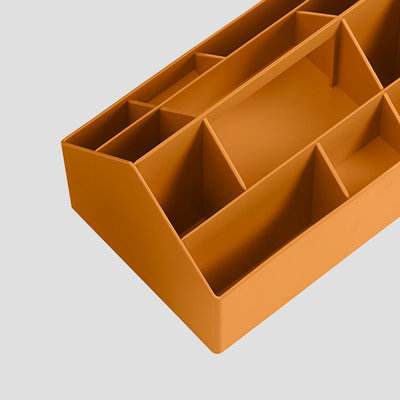
So what the heck is it? Bulthaup, the premium kitchen manufacturer whose work we previously drooled over here, has released a redesigned drawer system based on those troughs and dividers.


I've tried to winnow their florid description of the system, which reads like a term paper, down to a more manageable description of how it works and what the design thinking was:
continued...

Here's a great example of what can happen when experimental research is documented and posted on the web with plenty of explanation and resources. RISD student Sarah Pease, a junior in Furniture Design, took part in an independent study with the High-Low Tech Group at MIT's Media Lab this past Fall. spotted a project on MIT Media Lab's High-Low Tech page.
The original design of "Fab Speaker," an open-source project for creating portable speakers compatible with a standard audio jack, was by project leader David A. Mellis and was made from veneer wrapped and hot-glued around laser-cut wooden struts encircling the electronics, then topped with fabric.

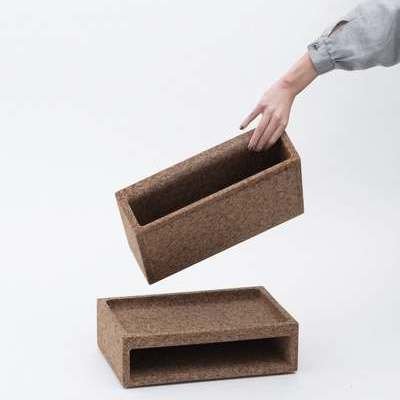
But he provided downloadable files so that anyone could whack up their own design. Mellis asked Pease to take the kit and design some alternative housings for it. Pease's beautiful take, "Audio Jar," consists of glass jars and bases whittled out of cork.
continued...
Posted by
Perrin Drumm | 29 Mar 2012
|
Comments (1)

I'm sure that while Keith Haring was covertly 'tagging' a subway station with his characteristic thick, black-outlined figures, he never ever thought those same forms would be mass produced and sold in a gift shop one day, but Keith Haring - Pattern Wall Tiles are officially for sale.
Now, no comments here about the commodification of art. I actually think this artist-inspired product is one of the least obnoxious of the bunch (I wince every time I see a Monet umbrella in the rain) because it actually makes sense as an extension of what Haring was doing in the first place. It's not like this image was just screened on a bunch of tote bags and plopped in a shop—not that there's necessarily anything wrong with that, it's just not the most original idea. Which is also not to say I think wall tiles should be made available for every popular artist now so people can enjoy their affordable "Picasso" at home.
The Haring wall tiles measure 2' x 4' and come two to a pack for $50. They're made of self-adhesive fabric (and they're non-toxic, no PVC or phthalates) so you can position them yourself in any pattern you like. They're shown here against a living room wall, but since they adhere to any smooth surface why not get a little more creative with your positioning. I think they'd look great along a curved wall, or cut them up into smaller pieces for wall in-sets.
If you want to show your Keith Haring love but this just isn't for you, the Brooklyn Museum gift shop has some nifty options beyond the exhibition catalog, like the Wood Baby Rocker and Wood Baby Pull Toy. Or just go see the retrospective; It runs through July 8, 2012.


Incase has released a sleek-looking line of bags called the Range Collection. Designed for cyclists, the rugged line-up—two sizes of messenger bag, two sizes of backpack and an iPhone case—are clad in weather-resistant twill, and contain tons of the thoughtful touches that Incase users have come to expect.
Each piece in the collection features durable twill construction with weather-resistant coating. On the inside, the Range Messenger Bag features a tarp lining while the Range Backpack includes a cinch collar for added protection against the elements. High-visibility reflective details and safety light attachment points make it safe to roam day or night, rain or shine.
The Range Collection bags have been designed to ensure maximum comfort even when fully loaded. On the Messenger Bag, the padded, adjustable shoulder strap features a quick release system and can be configured for both right- and left-handed. The Backpack features padded shoulder straps and an adjustable sternum strap for added stability while the padded mesh back panel provides added breathability.
Each bag in the Range Collection is equipped with a padded, faux-fur lined compartment for securing a notebook. Quick-access stash pockets and additional accessory pockets, including a U-lock utility pocket, allow for organized carrying of essentials.
With soft, predominantly fabric items like bags, I always have a hard time sussing out from photographs what they're really going to be like in 3D. A lot of times I'll see something on the web, then encounter it later in a store and find my perceptions of it were skewed. Video can go a long way towards providing a more accurate impression, so I'm glad InCase is rolling out video walkthroughs like this:
continued...
Posted by
core jr | 23 Feb 2012
|
Comments (1)
In its 19th year, the Student Design Competition sponsored by the International Home and Housewares Show announced this year's winning product designs from students representing institutions from around the country. The design competition's annual challenge to students is to redesign a current housewares product to meet the needs of the future or to create a concept for a new product. Winning projects are selected for their innovation, understanding of production and marketing principles and quality of entry materials.
Winning first place in this year's competition is Samuel Chen (Junior at the University of Illinois at Urbana-Champaign) for his "Cyclone" kitchen fire extinguisher and Mariel Piña (Senior at the University of Houston) for her "Ambos" grater/colander.

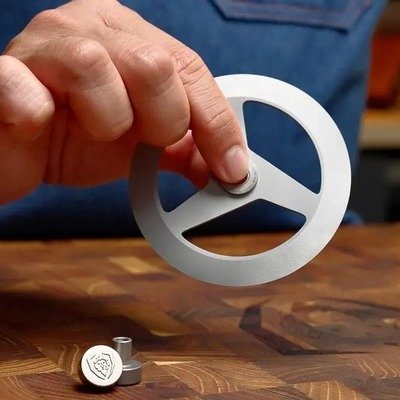
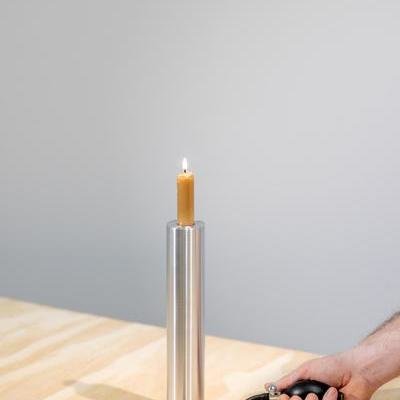
Chen's "Cyclone" is a first response product that helps put out kitchen fires utilizing a homemade solution of vinegar and baking soda. The design is stainless steel—elegant enough to sit in a tool tub on the kitchen counter or hang from a hook. Twisting the utensil's valve mixes the solution to spray a carbon dioxide foam. Because common kitchen ingredients are used, the tool can be used repeatedly unlike typical single-use products filled with hazardous propellants. "My product was sparked from the personal experience of a fire in my kitchen," Chen said. "Recognizing the panic and stress involved, I researched fires and designed an extinguisher to eliminate them in the most time and cost efficient way, keeping in mind an aesthetic and pragmatic design."

Piña's "Ambos" merges the function of a cheese/food grater and a colander into one product. Safe and ergonomic, her design is convenient for storage and reduces kitchen clutter. The lower center of gravity for the grater makes the "Ambos" more comfortable and stable. "My goal is to reconnect the user with the pleasures of simple living," Piña said. "Making an experience like grating cheese easy and enjoyable brings us back to basics. I also want to reduce the clutter in the home that prevents us from encountering life fully and wholeheartedly, so we can focus on simple tasks like cooking our own food."
continued...
Posted by
core jr | 18 Jan 2012
|
Comments (1)

The International CES 2012, as it does every year, presented an enormous array of gadgets, technology innovations and a feeding frenzy of consumer electronics commerce.
But looking above the fray of the convention floors, we see several disruptors to shape the macro trends of the coming years. Major technology and consumer behavior shifts are emerging that are changing the business of consumer electronics, media and entertainment and digital-online media. As social and mobile adoption mainstreams for consumers and marketers, new platforms, technology and media will emerge shaped by these fundamental disruptors:
APPIFICATION: The term "product" is evolving as mobile, online and tablet applications open up a new market for entrepreneurs, brands and businesses to create new services, utility and enhancements to existing products.
POST-SOCIAL WORLD: Social media and social networks, having reached mainstream, become less of a point of focus and integrate into consumer and marketer toolbox. New space races will emerge from combined social, mobile, local and digital enabled products that are accessed in new ways via tablets, ubiquitous smartphones and portable ultrabooks.
UBIQUITOUS CONTENT & DATA: Data is everywhere and content can be accessed in multiple forms. This overwhelming choice and abundance of invisible data collection is presenting opportunities and obstacles for people and brands to filter through clutter to get better information, more product and service relevance, and new social connections while retaining trust in providers and a promise of privacy.
UNIVERSAL ACCESSIBILITY: Technology, media and entertainment companies are finally unlocking content portability for consumers, so ownership and access of media can happen anywhere on any device in many forms. Once thought to be a barrier to success for the media industry, open and integrated content platforms are leading to smarter strategies to own media ecosystems with content, devices, online media and valuable data assets to monetize. Technology devices will also become more accessible, with low cost of entry of tablets, ultrabooks and feature rich mobile devices for middle and low income consumers.
GAMIFIED VALUE: Privacy concerns abound in a world where so much behavior happens in the digital space and new predictive and analytic technologies can understand personal behavior in new ways. However, as laws and standards come into place for data privacy and trusted data centric brands emerge, some of these fears will erode. As part of this, people will increasingly be willing to give up even more personal information to brands and online services for the return of rewards, social currency and "gamified" value.
CLOUD TECHNOLOGY & MOBILE: The coming years will see a major shift of how technology and data is stored and accessed. Where processing power and media storage once was primarily housed on local hard-drives and servers, most of this data will shift to wirelessly accessed networks that store content and data invisibly, automatically in large, enterprise driven server farms of Google, Amazon, Apple, Microsoft and Facebook. Over time, these server farms may translate to insight mines that store valuable, anonymous data the individuals, marketers and institutions will want to understand and access.
TRENDING IN 2012
Disruptive technologies are driving tangible product innovations and market-shifting invention. This is all possible as:
- Smartphone adoption accelerates
- Cloud computing proliferates
- App markets thrive
- New hardware and interface technologies become more accessible
- Social networking becomes embedded into daily life
Given the accelerated nature and unknowns of these events, in 2012 we'll likely see start-up driven activity and new product introductions from that major players (Apple, Google, Microsoft, Amazon, etc) that will create new dynamics in the market. Judging several categories of the CES Innovation Awards over the last three years has revealed five patterns we, at UPSTREAM, believe will impact the business of innovation for digital, physical and experience designers in the near term:
continued...

Copenhagen-based audio design company AIAIAI is releasing a new pair of headphones called Capital, designed by KiBiSi. While the two entities previously collaborated on the lightweight Tracks headphones, the can-style Capital is a beefier effort made to be both flexible and, more importantly to those of us who use the hell out of things, rugged:
Made out of nylon reinforced with fibreglass with a lightweight rubber-brace, the headphones are built to withstand heavy, everyday use in urban environments. It's also tested to withstand the rapidly changing environments of the city while delivering clear and crisp sound from the protected 40mm driver. The materials have been handpicked for durability, and the design lets you adjust to your own perfect, comfortable fit.

The adjustment system, as KiBiSi points out, "is reminiscent of snowboard bindings, in tune with the generally sturdy and eclectic solutions implemented." Those of us not attending today's Agenda streewear & action sports tradeshow in Los Angeles, where the wraps officially come off, will have to wait a bit longer to see those solutions in person.


Last week, an engineer mentioned his Harmony remote to me. He really loved it and was one of those passionate early adopters. I remembered that they had more humble beginnings, so I went back and did some quick research. Use this for a great case study of the power of design.
Harmony began as Easy Zapper in the Toronto suburb of Mississauga, Ontario around 2000-2001. In 2002, they were selling the remote pictured, the Harmony Easy Zapper, for $200. It featured all of the technical features that today's users rave about: activity-centered control, easy programming of the remote via a PC and constantly updated software. However, the one big thing it lacks is style: it looks like a Radio Shack bought electronic project box from the 1980s.
Someone else saw the same glaring problem: Logitech. Logitech bought the company in 2004 for the small sum of $29 million. According to their 2005 annual report, "The first Harmony remote to leverage Logitech's renowned design expertise, [the Harmony 880] features a large color screen and comfortable sculpted buttons." That focus on design is what has lead to the 2005 Logitech Harmony 880 pictured here. It retailed for $250.
Here's the kicker: In 2011, Harmony contributed $164 million in revenue and a profit of $57 million to Logitech's empire.

To those who are not familiar with the product, I have a later version, the 550, which retails for around $100. The quality design is evident just picking it up. It has a substantial weight, tight tolerances, no sharp flash around the plastic parts. Moreover, the higher quality (i.e. more expensive) manufacturing is clear: metallic painted plastic and soft-touch painted shell with an acrylic window separated by a line of vacuum-plated trim running through it. That's a lot of operations and assembly by the standards of a remote control that is normally squeezed out of an injection molding machine, stamped with a logo and screwed together over a PCB and some silicone buttons.
continued...
Posted by
core jr | 16 Dec 2011
|
Comments (5)

With the barrage of stylus options on the market and new ones cropping up every day, it can sometimes feel like wading through a sea of similarity when choosing the right tool for your needs. The Jot by Adonit is the most recent capacitative touch stylus to enter the fray, but with one incredibly important difference: the inclusion of a patented "precision disk."
This clear plastic disk sits on a ballpoint tip, giving touchscreen users the feeling of writing with a classic rollerball pen. Where the precision disk lacks in elegance of form it makes up in performance—reviews across the board mention that the Jot is the most precise stylus on the market.


The Jot comes in rainbow-colored aluminum options with the Jot+ including a rubber grip upgrade and magnetic cling to attach to your tablet without a bulky pen clip. The screw cap protects the precision disk when not in use and screws safely on top of the stylus while you're "writing." And by all accounts, it does feel like you're writing. The Jot was recently recognized as a finalist in the 2012 iF Product Design awards. See it in action with photographer Erin Kornfeld and menswear designer Ren Jett after the jump!

continued...
Posted by
core jr | 14 Dec 2011
|
Comments (0)

It's that time of year where the annual tradition of gift-giving can feel either like a stressful bummer or a nice creative exercise, depending on your level of holiday cheer. Chicago-based packaging studio Vessel took the latter path and is spreading that cheer around with a handcrafted gift for clients. And by handcrafted, we mean that in the best context—a handcrafted beer from Southern Tier Brewery in Lakewood, NY featuring a silkscreened bottle and matching drawstring bag. You might recognize the illustrations by Coretoonist and Vessel partner Tony Ruth (aka Lunchbreath) featuring his signature style and hand-lettering. A nice and simple way to say "thank you" during the holiday season.


continued...
Posted by
Ray | 1 Dec 2011
|
Comments (2)

While Dane Whitehurst has a pretty decent dayjob as the Creative Director of Burgopak, a packaging design company, the London-based designer has also been known to dabble in "Products for the Modern Thinker" on the side.
The things that interest, bother, upset, delight and define my outlook on the world are what drive my personal work. Each project has a message, some obvious, some more subtle but all exist as a means to provoke thought and discussion.
He recently reached out to us about his most recent design, the "iPeace," which is easily Whitehurst's most utilitarian design: a pair of earplugs with a carrying case. "iPeace allows you to carry a set of earplugs wherever you go, and by significantly reducing background noise will help those hectic moments to be that much more... peaceful."

As someone who can't bear to be on the train or plane sans iPod+earbuds, I appreciate the sentiment, but I still feel that the iPeace doesn't quite fit the bill as a necessity for the "modern thinker." I personally carry a Bullet (bike valve adapter), and I can see how a flashlight would be handy, but I can't imagine there's a huge market—of modern thinkers or otherwise—for everyday-carry earplugs.

Nevertheless, Whitehurst's website invites at least a little bit of "what's-behind-door-#2" exploration for a curious visitor, and I was pleased to discover that his other concepts are truer to their target audience. The "Martyr," above, is a playful take on a nightlight:
The Martyr is an energy saving fundamentalist. He wrestles tirelessly with the uncomfortable notion that in order to fulfill his ultimate cause in life; to save as much energy as possible he must extinguish his own light by pulling himself out of his socket.


His other designs venture further afield from practical application towards clever conceptual designs: the "Cliffhanger" mug lies somewhere between quotidian houseware and speculative object. It's a "seat-of-the-pants workout for the domestic thrill-seeker," a set of mugs that are characterized by "climbing holds instead of handles to provide a more challenging way to enjoy a cup of tea."

continued...
Posted by
Ray | 1 Dec 2011
|
Comments (6)


Yorkshire-based design consultancy is pleased to present their latest product design, "Peel," a sleek coffee machine. The ultramodern countertop device is characterized by its "elegantly crafted surfaces that peel away to reveal an eye-catching waterfall of rich coffee."
Inspired by the drip of flowing coffee, the stimulating rippled stainless steel base plate helps the user locate their coffee mug for brewing. Both the top and bottom plates are crafted from pressed stainless steel, with their edges falling away into a sea of soft blue light surrounding them. The stainless steel hot plates are encircled by glowing LED bands of soft blue light to indicate when the machine is brewing.
Brewing coffee on dark mornings is made easier by soft glowing LED bands and a simplified user interface that light up the room with colour.

While the luminescent elements are meant simply to attract the eye, the stylized base houses the water reservoir.
Intricate 3D lines seamlessly link the upper and low halves of the machine through an unbroken jet black polished band that contrasts with the satin matte body construction.
The perpendicular surfaces and sharp rear corner sit impeccably within the kitchen environment, disguising the internal piping structure which transports the boiled water from the base.

continued...
Posted by
Ray | 29 Nov 2011
|
Comments (6)
It seems that we've been seeing a glut of consumer audio solutions lately, collectively comprising a veritable addendum to our Ultimate Gift Guide (in which David Auerbach of Dijital Fix has you—specifically, your ears—covered).

Of course, there still seems to be room to grow in the headphone/speaker category, at least to the extent that crappy earbuds remain the de facto stock accessory for audio players (read: iPods). While Dr. Dre continues to build his electronics empire, Utah-based designers Jeremy Saxton and Jacob Hall have taken a more forward-looking approach to headphone design. Taking a cue from Scott Wilson of the wildly successful TikTok & Lunatik, the designers have cleverly combined the iPod Shuffle with the one accessory that its function is contingent upon: an output device.

The ODDIO1 represents the logical extension, in a manner of speaking, of cord reduction in the interest of streamlining the on-the-go listening experience—specifically for exercise and outdoor activities. By integrating an mp3 player into the headphones themselves, the ODDIO1 effectively cuts out the middleman of excess cabling, something like building a speaker around the iPod Shuffle, and the square-ish form factor of the cans is likely a reference to the iPod Shuffle itself.

Just as armband-based sports mp3 players existed prior to the TikTok & Lunatik, all-in-one headphone+mp3 players are nothing new. Thus, like Wilson, Saxton and Hall hope to extend the value—and design—of the iPod as opposed to competing directly with either mp3 players or headphones.


Check out the pitch after the jump:
continued...

Tonight, Core77 welcomes Nicholas Everett of Vanport Outfitters to our bi-weekly creative speaker series: The Hand-Eye Supply Curiosity Club hosted at the Hand-Eye Supply store in Portland, OR. Come early and check out our space or check in with us online for the live broadcast!
Tuesday, November 29th
6PM PST
Hand-Eye Supply
23 NW 4th Ave
Portland, OR, 97209
Vanport Outfitters was founded in Portland, Oregon with the goal of producing durable, handmade luggage and accessories using traditional craftsmanship and materials. Owner and Creative Director Nicholas Everett was born in Portland, where he grew up working at the family business crafting custom canvas products for sailboats and yachts. His 17 years in that field demanded a significant amount of design work with heavy canvas and the requisite fasteners and marine hardware.

continued...


[Photos from Flickr user afghtiga's excellent "Design Icons" photoset]
It's quite a feat of industrial design to produce something in 1970 that still looks contemporary 41 years later. Sony handily achieved that feat with their TR-1825 radio, a modernist cube that you slid open to expose the speaker on the front face while simultaneously revealing the controls up top.
Says Sony Design's History page,
Released in 1970, when Sony had become the first Japanese company to list shares on the New York Stock Exchange. Sliding the faces on this cubic radio reveals a speaker in front and controls on top, a unique design at the time. One version of its packaging commemorates the World Expo in Osaka, held in March that year, and many expo-goers picked up the radio as a gift.
Good luck finding one these days, though; even the mighty eBay was TR-1825-less at press time.
Posted by
Ray | 24 Nov 2011
|
Comments (0)

Bicycle lights have been something of a hot topic as of Spring 2011, from Ethan Frier and Jonathan Ota's "Project Aura" to, say, LED by Lite's ill-fated Kickstarter campaign. And while cycle-obsessed designers continue to explore new and innovative ways to illuminate their conveyance of choice, removable head- and taillights remain the accessories of choice for most urban riders.

Melbourne-based Knog is among the biggest names in the bike-light space: their line of one-piece silicone lights has quickly expanded both in terms of shape and size as they've built a loyal following on pace with the growth of the cycling trend over the past half-decade or so.
Yet Knog has transcended their outward hipster appeal with their unmatched approach to product design, making them the go-to purveyors of bike illumination for the fixed-gear set and hardcore commuters alike... not to mention modern makers.

Incidentally, my Frog Strobe went out of commission due to a faulty contact halfway through the summer and I was just about to pull the trigger on a new one when who else but Jonathan Chan of Knog's design team reached out to me about their new(ish) USB-rechargeable lights. He was kind enough to send me a care package with a pair of new lights, as well as a few other goodies, for what I hope is a comprehensive review for the design-minded urban cyclist.

USB-Rechargeable Boomer Bicycle Lights by Knog
Pros
- They're super bright
- Unique, thoughtfully-designed look and feel
- USB recharging is as convenient as it gets
Cons
- Not entirely weatherproof
- Indicator & electronics
- Durability issues (possibly due to rare defect)

continued...

What kind of luggage would you design, if practicality were besides the point? At first glance, British designer Sarah Jane Williams' bespoke suitcases, trunks and satchels suggest they might hold exotic musical instruments, and then you realize she's made these funky shapes simply because she can.

"Historically exceptional craftsmanship was the norm, now it is the exception," says her website. "Williams British Handmade is designed to challenge this statement by utilising regional historical craftsmanship and metamorphosising the traditional in order to produce a collection of original fashion artefacts."
All of the products produced by Williams British Handmade are bespoke or limited edition items made to the highest standards. The leather used is traditional bridle leather of the best quality possible. The brass frames are produced by an accomplished metal craft worker. Every stitch is compelted by hand using the traditional techniques of saddle stitching.
continued...
Posted by
core jr | 23 Nov 2011
|
Comments (0)

2011 has been a hard year. Global Revolution! Natural disasters! Bankruptcy! What's next? We're not hedging bets for 2012 just yet, but in case things don't turn out the way you'd expected, we've got you covered. Core77's Ultimate Gift Guide has everything you need to get through these hard times and survive through the... end times?
Today's pick is from Jennifer Leonard: Jennifer Leonard is an interdisciplinary Design Leader at IDEO, and the co-author of Massive Change (with Bruce Mau), a book about the future of global design.

In times of stress, it's important to stay organized! The Grid-It!, a Core77 Design Award Runner-Up, does double duty as a gadget organizer and iPad case. Have a place for chargers, cords, pens, gadgets and more. The system of woven elastics makes the Grid-It! versatile while keeping your tablet safe from debris or environmental stress. If only Grid-It! would make a full-body jumpsuit...
See the full gift guide HERE.
A special Thank You to this year's Gift Guide sponsor: Felt & Wire Shop offering a selection of curated paper goods direct from designers.